I saw this meme earlier today and rolled my eyes. What a load of crap. How is that Rue McClanahan (aka Blanche Devereaux) at 50 is somehow less desirable than JLo at the same age? Rue was a vibrant beautiful woman at the time. She also helped to change the perception, in the 80s, that women of a certain age weren’t sexy or sexual. She effortlessly made 50 fabulous. Plus, she did it without having to get on a pole.
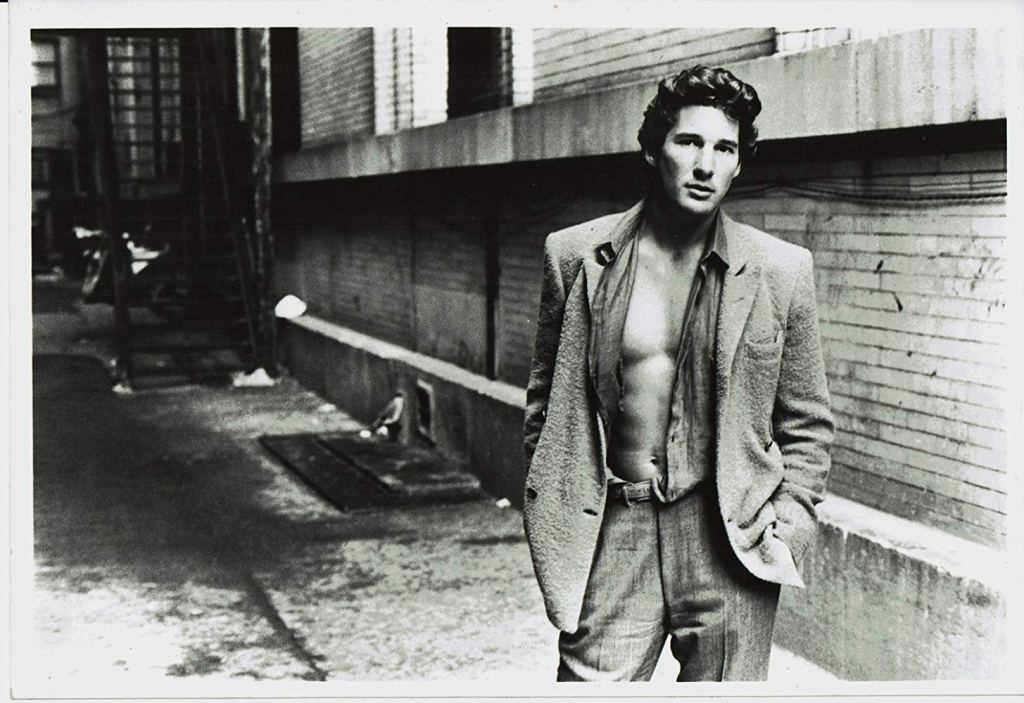
Richard Gere has coincidently starred in two iconic movies that centered around prostitutes in LA. American Gigolo came out in 1980 followed by Pretty Woman ten years later in 1990. Until recently when I re-watched both I didn’t stop to think about the parallels between the two. Or how they both feature Hector Elizondo. Let’s compare and contrast for their anniversaries.
Story
American Gigolo tells the story of Julian Kaye, a high-class male escort. He’s refined, elegant, classy, wears designer suits, and speaks multiple languages. His clients, wealthy older women, continually seek out his services. Things are going well for Julian until he is set up with a bad trick. That woman ends up dead not long after their encounter and her murder is pinned on him. In the midst of all this he meets Michelle (Lauren Hutton), a rich politician’s wife. They fall for each other as he attempts to clear his name.
Pretty Woman finds Gere playing Edward Lewis a powerful corporate raider that happens upon Vivian (Julia Roberts), a prostitute, one night on Hollywood Blvd. They have an instant connection and he hires her as his escort for the week. Rough around the edges Vivian is out of place in his high society world. Despite their differences, though, they grow closer and take their relationship beyond a business arrangement.
Love
Romance takes a back seat to the mystery in Gigolo. It makes sense. This is a thriller, not a love story. But, the relationship between Julian and Michelle could have been developed more. They meet, chat for a few minutes, and instantly she’s obsessed with him. At one point she stalks him through the streets of Westwood. It’s unclear why she is so drawn to him, aside from his looks and charm. We never know her motivations because her character is so paper thin. She exists primarily to prop up Julian. After he gets framed, Michelle risks everything to help prove his innocence. She is the only one who cares about him, but the film doesn’t give us any reason to care about her. For his part, I think what makes her most desirable to Julian is her extreme devotion to him.
The relationship between Edward and Vivian is at the forefront of Woman. It’s actually a great story about two people falling in love. Over the course of the movie they share intimate details about themselves and get to know each other. Edward tells Vivian about his heartless father leaving his family and how that shaped him as a person. She responds by letting him in on her rocky upbringing. They feel comfortable being vulnerable with one another. There’s also the romantic dates and beautiful love scenes. At one point, Vivian breaks her rule about not kissing a client on the mouth because by that point Edward is no longer just another number.
Interestingly, in both movies Gere’s characters think they don’t need love or are incapable of maintaining a real relationship. Julian sees women as transactions. He’s not looking for any attachments until Michelle comes along and changes his thinking. But he pushes her away after he’s arrested for murder, telling her he’s not worth ruining her life. He doesn’t want to drag her down. She ignores him and stays by his side, proving to him that he is worthy. Similarly, because of his past family drama Edward doesn’t make room in his life for love. In the opening scene of the film his girlfriend dumps him because he won’t make her a priority in his life. He nearly ruins things with Vivian too. When she tells him that she loves him, he doesn’t share how he really feels. Instead he offers to make her a kept woman, as if money is what she wants. He finally gets a clue at the end of the movie and shows Vivian how much he loves her.
Supporting Players
As mentioned earlier, Hector Elizondo is a prominent player in both films. In Gigolo he’s Detective Sunday, the cop overseeing the murder investigation. He doggedly pursues Julian, eager to find him guilty. Woman finds him playing Barney Thompson, the manager of the Beverly Hills hotel where Edward is staying. He takes pity on Vivian when she’s shunned by the snooty Rodeo Drive sales ladies, becoming her confidant. In both instances, Elizondo brings something interesting to what could have been two ordinary roles. A dash of humor and some flair. Also, in the case of Woman, a pretty obvious toupee.
These films have some truly horrible villains. There’s Leon (Bill Duke) the vengeful pimp. Julian left him years before the movie starts and he’s been pissed ever since. Spoiler alert…Leon is the one who is framing Julian. Woman has Stuckey, played with an incredible amount of sliminess by Jason Alexander. He’s Edward’s lawyer who can’t stand it when his client wants to focus less on making money and more on love. At one point, Stuckey tries to rape Vivian. Luckily, Edward arrives and kicks his ass. He actually ends up better off than Leon who gets pushed off a balcony. He had it coming.
Also, old Hollywood star Ralph Bellamy makes his last film appearance in Woman as the owner of a company that Edward is trying to take over. It’s a small part, but not a bad way to end your career. Plus, Bellamy was probably glad he hung around long enough so that Disorderlies wasn’t his last film.
Soundtracks
Gigolo begins with Julian driving down the California coast in his Mercedes as Blondie’s “Call Me” blares from the radio. Of course, the title and lyrics are prefect for a movie about a call boy, but the track also captures the feel of the early 80s. A little bit of leftover disco with some rock sprinkled in. Pieces of “Call Me” show up in the movie’s score. Sometimes upbeat, sometimes eerie. It’s a versatile piece of music. Famed disco producer, Giorgio Moroder, composed the song and the rest of Gigolo’s soundtrack. The album went to #7 on the Billboard 200 and “Call Me” spent six weeks at #1 on the Billboard 100. I’m also a fan of the Cheryl Barnes song “Love and Passion” that plays in a disco scene. It’s a fun track.
You can’t think of Pretty Woman without hearing Roy Orbion’s classic “Oh Pretty Woman” that inspired the film’s title. Originally released in 1964, the song was launched back into the zeitgeist when the movie came out. It pops up during one of the best shopping montages in cinematic history. Not an exaggeration, I love seeing Vivian shop. The soundtrack would go on to be certified triple platinum and produce hits like Roxette’s “It Must Have Been Love”, Natalie Cole’s “Wild Women”, and Go West’s “King of Wishful Thinking”. Classic early 90s tunes.
Legacy
At the time of its release Gigolo was a novel concept. You didn’t find too many narratives about male prostitutes back them. Moreover, you didn’t often see men sexualized in the way that the film does. Director Paul Schrader celebrates Gere’s beauty in almost every scene, training the camera on his amazing face and body. This was the first mainstream movie where the male lead does full frontal nudity. And it’s not just a quick flash. So much of Gigolo is about visuals really, from the fashion to the lighting to the ornate sets. I wish there was an equal amount of substance. Yes, the film is beautiful to look at, but it often feels empty. The writing is clunky at times and the mystery, in particular, is weak. Despite these faults, Gigolo is an interesting time capsule from the early 80s.
Woman’s premise doesn’t seem like something that you could make an endearing romantic comedy out of. A fairytale love story between a prostitute and her john? That goes beyond your typical hooker with a heart of gold story. But it works. The star power from the leads, their chemistry, and a winning screenplay all come together nicely. Director Gary Marshall crafted a timeless film that holds up years later. You could come across Woman on TV (probably Bravo on a Sunday afternoon) and be just as engaged as audiences were back in 1990. The sign of a true classic.
Sam Mendes’ 1917 follows two young soldiers on a dangerous mission during WWI. In the film, Schofield (George MacKay) and Blake (Dean-Charles Chapman) are tasked with warning a British battalion that they are walking into a trap set by the German army. If they fail, 1,600 lives will be lost, including Blake’s brother (Richard Madden). The two men have to make it through enemy territory to the front line with very little time to spare.
The film was shot and edited to look like one long continuous take. This technique makes everything feel more contained and personal, as if you are alongside Schofield and Blake as they charge into claustrophobic spaces, crawl under barbed-wire, and dodge bullets. Mendes, who also co-wrote the screenplay, creates a nerve-wracking narrative with few breaks in the tension. There’s also the stunning cinematography from Roger Deakins, literally getting the viewer in trenches. In addition, MacKay and Chapman expertly convey the bravery and terror, along with a host of other emotions, that their characters are experiencing.
Mendes has said that he intended 1917 to be more of a thriller and less of a conventional war movie. He succeeds. Yes, history buffs will probably enjoy it, but this isn’t a stuffy boring story. It’s a compelling film that immerses you in these men’s lives and their journey.
I watch the 1974 version of Black Christmas every holiday season. It’s kind of like my own version of It’s a Wonderful Life and certainly more fun than that downer. IAWL is the This is Us of Christmas movies. But I digress. For its 45th anniversary, let’s get into why BC is one of the best holiday horror films.
They’ve got character
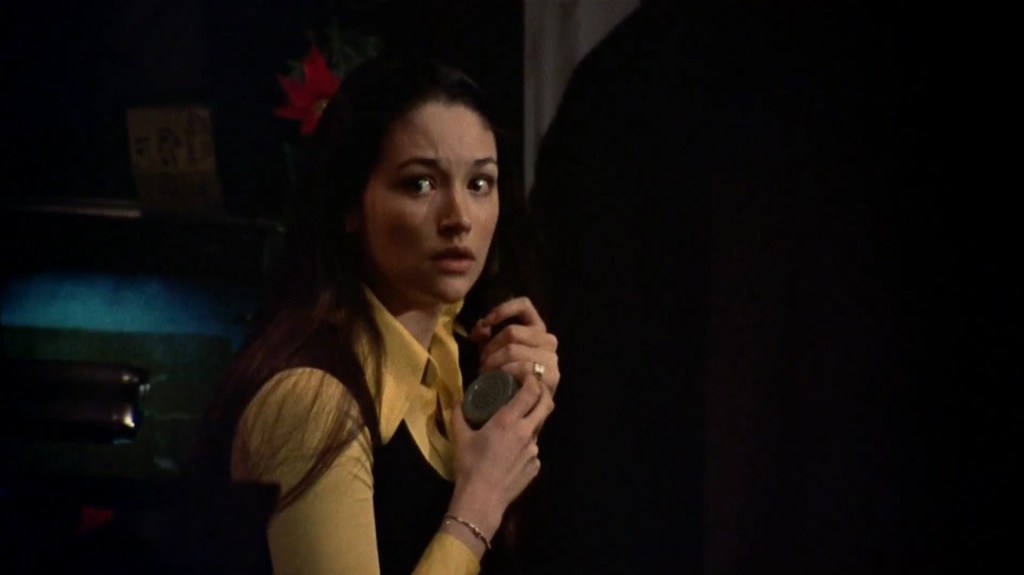
Just like the recent remake, the original is set in a sorority house where a small group of the women are staying over Christmas break. Unbeknowst to them, a psychotic killer has taken up residence in their attic. Creepy attics were made for murderers. Basements aren’t much better. But, back to the sisters. It’s rare in a horror movie to care about the characters. Typically, they’re one dimensional and underdeveloped. Plus, you know they’re going to die soon, so why put in the effort. But in BC, the main group is actually well written and worth giving a crap about. Jess (Olivia Hussey), our final girl, is intelligent, strong, and caring. She has her own mind. In the movie, we find out that she’s pregnant and intends to have an abortion. Even with her boyfriend Peter (Keir Dullea) pressuring her to keep it, she won’t be swayed. It didn’t occur to me until after watching the 2019 BC, with its strong feminist story, that the original already explored that perspective. A young woman making decisions about her body despite a man’s interference is pretty advanced for 1974. Then there’s Barb (Margot Kidder), the clever sardonic sister. She uses her wit and bravado as armor, sometimes hurting others with her sharp tongue. We only see her break once, when she feels guilty because she thinks her harsh words drove Clare (Lynne Griffin) away. It’s only then that Barb’s vulnerability comes out. She’s an interesting flawed person. Finally, kind-hearted Phyl (Andrea Martin) rounds out the trio. She doesn’t get much of a storyline, but you’re still invested in her. She’s a genuine supportive friend to the others. There’s also a good cop in the movie, Lieutenant Fuller (John Saxon). He’s actually smart (don’t see that often in scary movies) and takes the concerns of the girls seriously.
Oh, the horror
From the first shot of the sorority house, director Bob Clark gets you in the mood for what is to come. It’s a dark, cold, eerily quiet night. Then we see, from his POV, as the killer climbs up the side of the house into the attic. Shortly thereafter the phone rings. He’s calling the women, howling and screaming like a maniac. It’s disturbing. The rest of the movie carries on in the same vein. Little things, like the ominous score and sound effects (that duuuuuunnng noise), can be very jarring. There’s not a lot of blood and gore here because you don’t need it in order to scare the viewer (something the 2006 version didn’t comprehend). When Barb is killed, yes you do see blood, but nothing over the top. It’s more unnerving that Clark juxtaposes her death with a children’s choir caroling downstairs at the front door. And who needs gore when you have a ton of suspense? Watching Jess, alone in the living room, unaware that her friends have been killed, frightened by the incessant phone calls, and fearful for what might come next is pure terror. The biggest moment comes when the police, who have been trying to trace the phone calls, discover their origin. They warn Jess with the now classic, “the calls are coming from inside the house”. That should have been followed by a “run, girl!”, since she decides to stay put and look for her friends. Oh Jess. My favorite scare is when the killer chases her and grabs her hair through the bannister. Makes me jump every time.
Comic relief
To break up all these scary moments, Clark and screenwriter Roy Moore add some much-needed humor to the movie. Marian Waldman plays Mrs. Mac, the girls’ boozy house mother. The running joke is she’s always drinking from bottles of alcohol that are hidden around the house. Who knew you could chill your spirits in the toilet tank? There’s also desk sergeant Nash (Douglas McGrath) at the police station. He’s dumber than a box of hair and that’s being generous. The fellatio gag never gets old. “It’s something dirty, ain’t it?” And, of course, Barb brings the laughs with her extended zoo sex story. You’ll never look at turtles the same way again.
Unanswered questions
There are times when a movie doesn’t provide all the answers and you’re actually ok with it. BC falls into this category. There are a lot of plot points left up to the audience to decipher on their own. The biggest one being the identity of the killer. Or a reason for why he is doing this. Also, what was he babbling about on the phone? Similarly, the b-story of the movie focuses on the disappearance of a little girl who is eventually found dead in the park. Could the sorority house killer have been involved? Or maybe there are two murderers running around. And later in the movie, after the police have left unconscious Jess alone in the house with the killer still in the attic, you wonder if he’ll come after her again. But we’ll never know since the movie ends with a…
The original Black Christmas is one of my favorite horror movies. Probably a strong #2 on the list. Because of that I don’t expect a remake to come close to matching it. Especially after that horrible 2006 version. Wow, that was an abysmal movie. So, I went into this new remake of Christmas just hoping it would be an improvement.
In the movie, set at mythical Hawthorne College, a group of sorority sisters are staying on campus during the Christmas break. What they don’t realize is that a masked killer is stalking the grounds, murdering women one by one. It’s a pretty standard set up. But this version of Christmas takes a new feminist stance. We learn that main character Riley (Imogen Poots) was assaulted a few years ago at a fraternity party. Since then she’s been timid and unable to find her voice. As the film progresses, she begins to fight back against the dangerous men who are circling her and her sisters.
I liked idea of injecting a strong dose feminism into a horror movie. Unfortunately, the execution is weak. Writer & director Sophia Takal clumsily handles issues of toxic masculinity, #metoo, and patriarchy. It never really comes together. You feel like she is hitting bullet points rather than smoothly incorporating them into the story. Also, this is a horror movie that isn’t very scary at all. There’s a lack of suspense and thrills. Just a couple of jump scares. But then the worst thing is when the big twist is revealed towards the end. It’s just so damn dumb and completely takes the viewer out of the story.
While I appreciate the idea of a new approach to a classic, this one really missed the mark. However, it’s still ten times better than the shitty 2006 version. So, there’s that.
In the summer of 1996, I was sixteen, living in Atlanta, and about to start my senior year of high school. I also had a job as a clerk at Kroger Video, the local grocery store version of Blockbuster. Yes, that was a thing. I spent most of my days working or watching movies that summer. But, like everyone else in town, I was captivated by the Olympics coming to Atlanta. It was a big deal to be chosen as the host city and everyone was glued to the action. Then things took a dark turn with the bombing in Centennial Park. Having experienced this all firsthand, I was particularly interested in the new movie, Richard Jewell, that depicts the events.
Richard Jewell (Paul Walter Hauser) was a security guard working at Centennial Park during the Olympics. By chance he discovered a suspicious backpack in the park that turned out to be a bomb. Jewell helped to get hundreds of people to safety before the bomb went off. He was declared a hero, until an overzealous FBI agent (Jon Hamm) zeroed in on him as a suspect. Then an unscrupulous journalist (Olivia Wilde) got ahold of the story and ran in on the front page of the Atlanta Journal-Constitution. Jewell suddenly went from hero to villain.
Hauser does an excellent job of portraying this wronged man. It’s sometimes a subtle performance, but still very effective. He makes you feel angry for his character as he’s targeted by the authorities. Sam Rockwell plays Jewell’s lawyer and brings some much-needed comic relief. Kathy Bates turns in a terrific performance as Jewell’s mother. She is the heart of the film, showing how this ordeal affected those closest to Richard.
What’s most interesting about this story and the movie is how law enforcement and the media, with little to no evidence, railroaded this man. They invaded his home, slandered him, and made his life unbearable. It was all for nothing because he was innocent. Side note, that’s not a spoiler if you remember the story or visit Wikipedia. Six years after the attack, the actual bomber confessed. But for many, Jewell is probably who comes to mind when they think of the bombing. It even took me a second to remember that he didn’t do it when I heard about this movie coming out.
My one complaint is that this history lesson is told with broad strokes and not a great deal of depth. It’s more informative than impactful. Also, Clint Eastwood’s direction comes off as flat. Even the moment when the bomb goes off seems anticlimactic. Similarly, Ham and Wilde’s characters often come off as one note villains. Eastwood could have taken more time to explore their characters and motivations. Despite these faults, I liked the movie and the opportunity to revisit a significant moment from Atlanta’s past.
Christmas came early this year. Mariah Carey’s holiday classic, “All I Want for Christmas is You” hit no. 1 on this week’s Billboard Hot 100 chart. It’s an amazing feat considering the song came out in 1994. Every year it has grown in popularity, landing at no. 3 last season. It was only a matter of time before it would get to the top spot. Even better, this is Mariah’s 19th number 1, more than any other solo artist and one less than The Beatles. She has also headed the chart in three different decades now. She truly is an amazing artist. And some may say the Queen of Christmas.
In Martin Scorsese’s latest film, The Irishman, Robert DeNiro plays Frank Sheeran, a truck driver turned mob hit man. Over the course of several years Frank becomes deeply involved with crime boss Russell Bufalino (Joe Pesci) as well as Jimmy Hoffa (Al Pacino), the infamous leader of the Brotherhood of Teamsters. These relationships shape Frank’s life in both promising and harmful ways.
Here’s the thing, I enjoyed this film. Visually and stylistically it’s fantastic. That’s no surprise when you consider the director. The talent on-camera is equally amazing. It’s a who’s who of iconic Oscar-winning actors. And surely this film will pick up a lot of awards. Now, do I ever need to watch it again? Nope. For one, there’s the excessive 3.5 hour runtime. Thankfully Netflix made this movie because I can’t imagine watching it in the theater. They could have stopped at 2.5, may 3 hours tops. It’s a lot of movie. That doesn’t make it the most exciting though. A bunch of things happen and plot points are explored, but I wasn’t riveted by all of it and a few times I was actually bored. There’s also the feeling that you’ve seen this all before. A mob story that takes place in the past, directed by Scorsese, and starring DeNiro, Pacino, and Pesci. Sound familiar? It’s like a greatest hits album.
In any event, I’d recommend seeing The Irishman. It’s an impressive film. But be prepared for its bloated, déjà vu inducing qualities.








 NostalGeoff