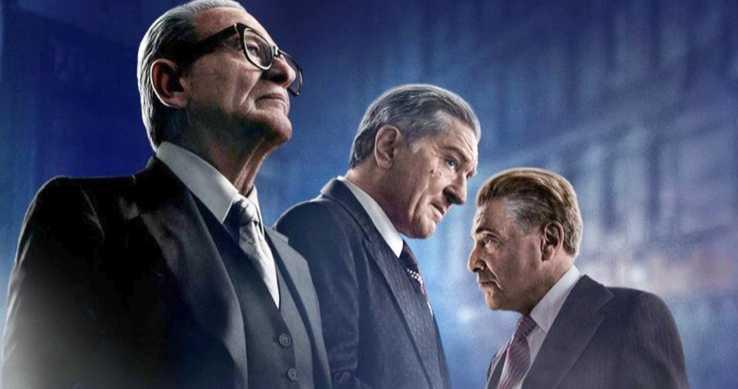
In Martin Scorsese’s latest film, The Irishman, Robert DeNiro plays Frank Sheeran, a truck driver turned mob hit man. Over the course of several years Frank becomes deeply involved with crime boss Russell Bufalino (Joe Pesci) as well as Jimmy Hoffa (Al Pacino), the infamous leader of the Brotherhood of Teamsters. These relationships shape Frank’s life in both promising and harmful ways.
Here’s the thing, I enjoyed this film. Visually and stylistically it’s fantastic. That’s no surprise when you consider the director. The talent on-camera is equally amazing. It’s a who’s who of iconic Oscar-winning actors. And surely this film will pick up a lot of awards. Now, do I ever need to watch it again? Nope. For one, there’s the excessive 3.5 hour runtime. Thankfully Netflix made this movie because I can’t imagine watching it in the theater. They could have stopped at 2.5, may 3 hours tops. It’s a lot of movie. That doesn’t make it the most exciting though. A bunch of things happen and plot points are explored, but I wasn’t riveted by all of it and a few times I was actually bored. There’s also the feeling that you’ve seen this all before. A mob story that takes place in the past, directed by Scorsese, and starring DeNiro, Pacino, and Pesci. Sound familiar? It’s like a greatest hits album.
In any event, I’d recommend seeing The Irishman. It’s an impressive film. But be prepared for its bloated, déjà vu inducing qualities.
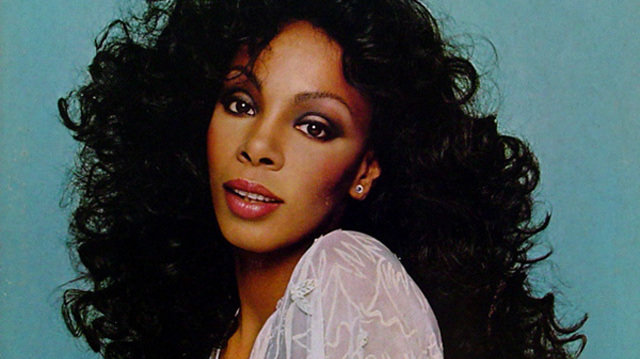
Donna Summer ruled the music charts in the 1970s, turning out hit after hit. She and her longtime producer, Giorgio Moroder, had perfected the formula for dance music of that era. In November 1979, they came out with “On the Radio”. The track was written for the Jodie Foster movie Foxes. It’s used throughout, sometimes with Donna’s vocals, other times with just the gorgeous melody providing the film’s score. In the song, her ex-boyfriend writes her a letter, but he loses it before it can be delivered. Luckily, someone finds it and reads it on the radio. Sure, why not. Donna instantly knows it’s from her ex. She’s been pining for him ever since they broke up and this opens up the door for a reconciliation. That’s the power of the radio. The lyrics aren’t really the important part here. It’s more about the feelings that Donna conveys. The song starts off slow like a ballad. Her voice is relaxed and subdued, pulling you in. Then the beat drops and you’re elated as her soaring vocals take you to the dance floor. It’s a fantastic mix of emotions. “Radio” went on to become Donna’s tenth top ten single on the Billboard 100, further cementing her status as the Queen of Disco. “Whoa, oh, oh…”
I typically
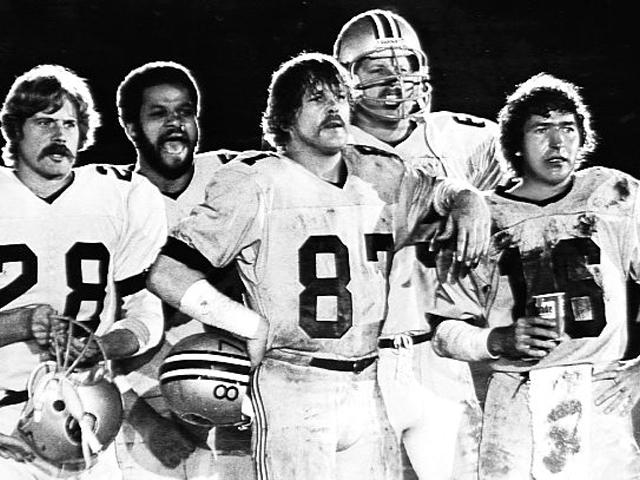
don’t watch sports or movies about sports, but I’m a big fan of North Dallas
Forty. I can’t quite explain it, you like what you like. The movie
celebrates its 40th Anniversary this year, so why not talk about
this exception to my no-sports rule.
Based
on Peter Gent’s semi-autobiographical novel, NDF follows the players on
the North Dallas Bulls football team. Gent, a former wide receiver for the
Dallas Cowboys, knew that world firsthand. Nick Nolte plays Phil Elliott, a
veteran wide receiver who has seen better days. His body is broken from years
of playing in the league and only a steady stream of drugs (pot and
painkillers) can get him out of bed. A love for the game also keeps him going.
But he understands that the men in charge don’t share that same passion.
Head coach B.A. Strother (G.D. Spradlin) obsesses over figures and percentages, wanting to win at any cost. The owners, the powerful Hunter family (Steve Forrest, Dabney Coleman), seek the money and bragging rights. Football is an industry for these men and the players are just commodities. Phil’s best friend Seth Maxwell (Mac Davis), the charismatic Bulls quarterback, knows how to play the “game”. He warns Phil about toeing the company line. But, Phil rebels, making him a target for B.A. and the Hunters. This David & Goliath story forms the crux of the movie. That’s one of the reasons I like it so much. It’s less about football and more about the little guy beating the cold evil corporation. At one point, lineman O.W. (John Matuszak) rails at assistant coach Johnson (Charles During), “Everytime I call it a business, you call it a game. And every time I call it a game, you call it a business. It’s a powerful truthful statement.
Of
course, the actual football scenes aren’t so bad. The lead up to the big game
in Chicago is one of the best sequences in the movie. All of the players are huddled
in a small locker room with nothing to do but wait. Director Ted Kotcheff focuses
in on their anxiety as he cuts from player to player. They pace around, fidget,
perform pre-game rituals, punch lockers, and even pray. As a viewer you feel
anxious yourself as the minutes creep by. The few moments we see of the game
are filled with tension as we wonder if this weathered team can actually win.
It’s incredibly stressful, yet entertaining. Much better than any real-life game
I’ve ever seen.
Now,
all this praise doesn’t excuse the problematic moments in this
movie. Several women are sexually harassed, lineman Joe Bob (Bo Svenson) says questionable
things to his black team mates, and all of the players are quick to throw
around homophobic slurs. Yes, this came out in 1979, but they really should
have known better even then. I still enjoy the movie, but I don’t condone their
behavior. On the flip side, there’s a clear romance going on between teammates
Balford (Alan Autry) and Partridge (Jeff Severson). They enjoy wrestling around
a little too much, have a very intimate conversation in the locker room
(complete with a cheek caress), and they actually kiss “jokingly”. It
would have been nice if that B-story had been explored.
I first
heard about NDF when I read the coffee table book, The Stewardess is
Flying the Plane: American Films of the 1970s. A great book, by the way. I remember
thinking that I should check out this movie sometime and I’m happy I did. Warts
and all, it’s an interesting look at football in that era, on and off the
field.
*Sidenote**
What’s another good thing about this movie? The Gibson Brothers’ “Cuba” on the soundtrack. Such a fun song.
The Facts of Life and I are both turning 40 this year.
One day apart. Making us some kind of Virgo siblings. It certainly feels like I’ve
been watching the show all my life. Syndication has a way of tricking you into thinking
that.
The first season of Facts looked much different from
how most people normally remember it. The show was a spinoff of Diff’rent
Strokes. The Drummonds housekeeper, Mrs. Garrett (Charlotte Rae), left the family
to become the housemother at Eastland School for Girls in upstate NY. Back then
there were seven girls: Blair, Tootie, Natalie, Nancy, Sue Ann, Cindy, and Molly.
There was also the head master, Mr. Bradley, and a teacher, Miss Mahoney. The
cast had more characters than a Robert Altman movie. By the time season two
came along the show was trimmed down to three girls. Rich bitch Blair (Lisa Whelchel),
gossipy Tootie (Kim Fields) and bubbly Natalie (Mindy Cohn). Plus, they added a
newbie, tough girl Jo (Nancy McKeon). And Mrs. Garrett had been promoted to
being the school dietician with the four students working in her kitchen. I
actually liked season one, but narrowing down the cast and making things more
focused improved it.
The set up for each episode was pretty standard. A problem
would arise with one of the girls, jokes would flow, and then things always got
worked out in the end. Jo and Blair would throw barbs at each other. She’s blue-collar!
She’s rich! Conflict! Tootie and Natalie would get into some hijinks. And, Mrs.
Garrett would dole out wise advice. Normally there was a social issue explored.
Suicide, eating disorders, pregnancy, teen prostitution, or discrimination. It
could all be pretty formulaic, but it worked. I think it was the cast that sold
it. You cared about Mrs. Garrett and the girls no matter what situation they
were put in. They could have easily been one dimensional characters, but the
writing and acting gave them some depth. Well, as much as you can for an 80s
sitcom.
Of course, as the show went on (9 seasons and 209 episodes),
it didn’t age so well. Once the girls finished at Eastland, the dynamic changed.
Then Mrs. Garrett left and was replaced by her sister Beverly Ann (Cloris Lechman).
Plus, they threw in a bunch of random new characters: Andy, George, and Pippa.
It all got a little dumbed down and one-note. Let’s not even get into the Over
Our Heads years. That’s why I tend to stick to the earlier seasons if I come across
a rerun. Early 80s, yes. Late 80s (with half the cast in mullets), no.
But, even if it didn’t always get it right, The Facts of
Life was an entertaining show and will always be a favorite. You take the
good…ah, you know the rest.
**BONUS**
I have to mention the two Facts TV movies. The Facts of Life Goes to Paris finds Mrs. Garrett and the girls studying in France for the summer. Jo falls in love while Blair realizes that she’s ok without a guy. So much discovery. In The Facts of Life Down Under, the gang heads to Australia. Blair and Jo get involved with jewel thieves, Natalie explores the outback, and Tootie falls for a faux-Aborigine played by Mario Van Peebles. At some point, a boomerang is thrown. Wacky Aussie adventures!
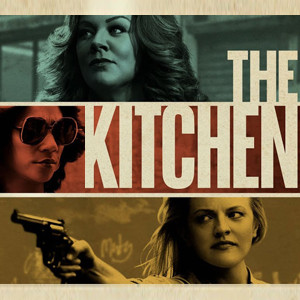
I went into The Kitchen with low expectations. Seriously
low. The reviews online had not been kind, but I figured I’d give it a shot
anyways. It turns out the critics were wrong. At least in my opinion.
In 1978, three gangsters in NYC’s Hell’s Kitchen get busted and sentenced
to three years in prison. Their wives are left behind to navigate the gritty
Irish neighborhood alone. Kathy (Melissa McCarthy) is the heart of the group.
Mother of two, sweet, and friends with everyone in the community. Ruby (Tiffany
Haddish), a black woman, has basically been iced out by her white in-laws. Especially
her nasty mother-in-law (Margo Martindale). Claire (Elizabeth Moss) is actually
thankful for her husband’s sentence because he has been abusing her for years.
The women are given little financial assistance and can’t get real jobs. So, they
decide to go into the business, seeing a chance to outmaneuver the head of the
mob and usurp his territory. The money flows in along with the problems.
Murder, backstabbing, and twists come flying fast.
The theme of women’s empowerment runs through the film. It was
written and directed by a woman (Andrea Berloff) and has three formidable
female characters. For years Kathy, Ruby, and Claire depended on men to take
care of them. But when their safety net is taken away, they discover they can
do a better job of running things. It’s not that they don’t need men. They come
to rely on a few tough guys, especially brutal executor-turned boyfriend,
Gabriel (Domhnall Gleeson). But they needed the men to get out of their way so
they could stand on their own. As their husbands’ equals. The tenacity was inside
them all along. They just needed the opportunity.
Berloff and her cast successfully capture the evolution of these
former mob wives in a changing landscape. Yes, there are some weak plot points
in the script. And certain characters
could have been fleshed out more. But in the end, I walked out of the theatre
feeling more entertained than I would have thought going in. Sometimes you have
to ignore movie reviews. Just, not mine.
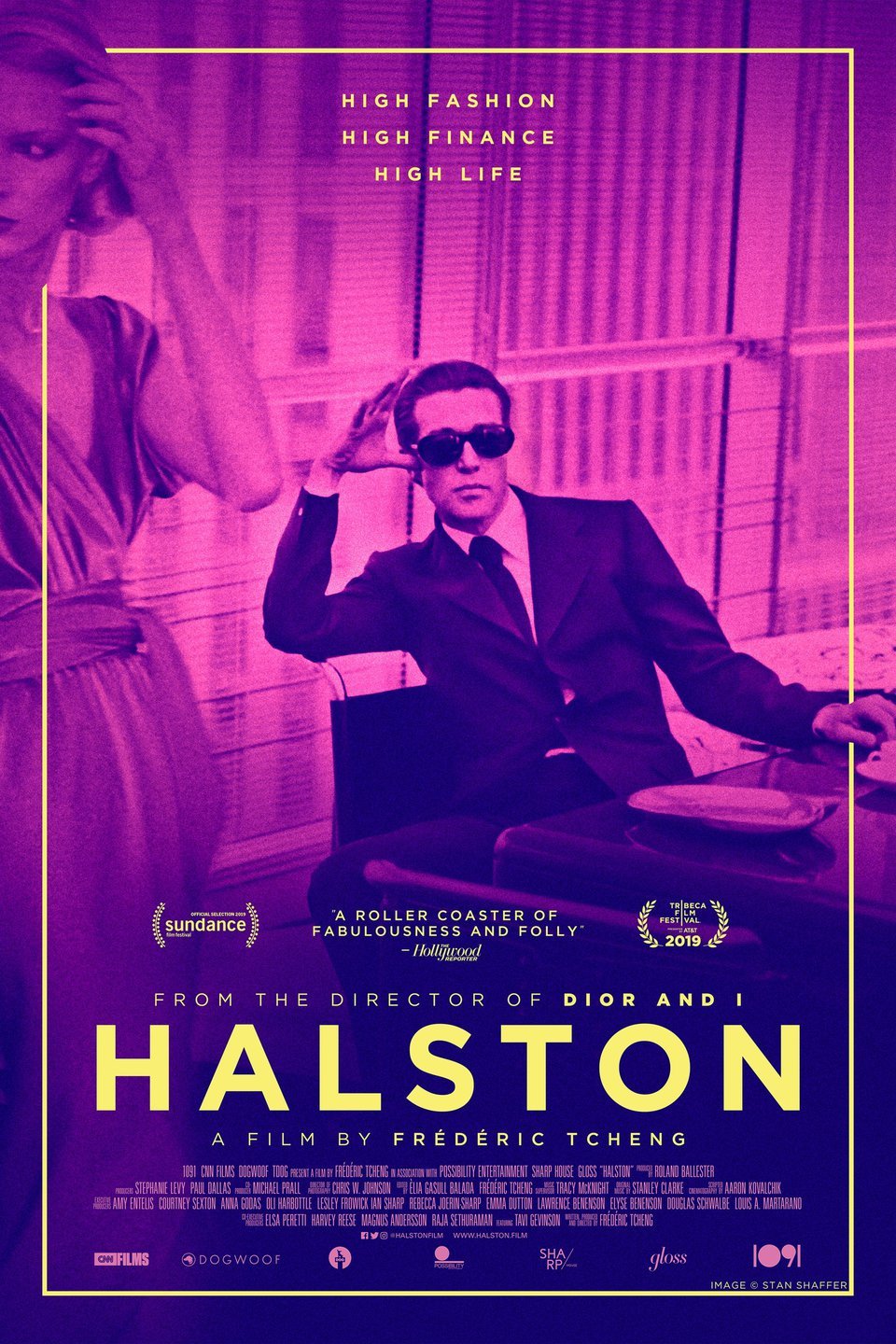
The documentary Halston tells the story of the famous fashion
designer who made a huge mark on the industry in the 70’s and 80’s. Halston started
out as a hat designer for Bergdorf Goodman, going on to create Jackie Kennedy’s
iconic pillbox hat for JFK’s inauguration. Hats soon evolved into an entire
women’s line. His style was effortless chic. Simple, but stunning pieces that
flattered a women’s body. Soon he branched out into perfume, menswear, bedding,
and even flight attendant uniforms. It seemed like everything he touched made a
profit. Of course, his precipitous rise led to an even bigger fall. Three
things did him in: drugs/partying, selling his company/name to a corporation,
and partnering with JC Penny for a more cost-friendly line. The documentary
focuses a great deal of time on that last one. Soon Halston found himself shunned
by the fashion world and kicked out of his own company. Six years later he was
dead at age 57 from AIDS-related complications. An incredibly sad end for such
a towering man.
My main issue with the movie is that director Frederic
Tcheng could have presented a more well-rounded look at Halston, the man. His
personal life gets so little airtime. There are about two sentences devoted to
his relationship with illustrator Victor Hugo. Leaving the viewer to wonder
exactly how this love affair began and ended. Then there’s the missing chunk of
time between losing his company in 1984 and his death in 1990. Did he keep on
designing? Were there any hopes of staging a comeback? All a mystery. Similarly,
the years after he died, when the Halston line was revisited by other designers
in the late 90s and 2000s, is given zero play. Tcheng missed out on an
opportunity to go further into the story. I could have also done without the
filmmaker’s fictional narrator framing device. The interludes featuring her
were fairly corny and unnecessary.
On the plus side, there are several great moments in the
film. For starters, seeing Halston’s stunning designs in all their 70s/80s
glory. He had such a talent for making simplistic clothing seem very glamorous.
He really put his stamp on that era in fashion. All of the archival footage is captivating.
The Battle of Versailles, a grand China trip, and his many television
appearances. I enjoyed the scenes featuring him and his troupe of beautiful
models, the Halstonettes. So campy. The talking head interviews are also well
placed. I especially liked hearing from Liza Minelli, model Pat Cleveland, and Halston’s
niece Lesley Frowick. You can tell that they all loved him deeply. At one point
Liza refuses to speak negatively of her friend or dish any dirt. And that’s the
last you see of her.
Even with a few flaws, Halston works as an homage to
a brilliant designer. He may have made some missteps, but he will be remembered
as someone who shaped the fashion world and the American culture.
And now, just because, here’s Sister Sledge’s “He’s the Greatest Dancer”, which gives Halston a shout out…
I heard “My Sharona” for the first time when I saw Reality
Bites in 1994. In the movie, Winona Ryder’s character and her friends are
raiding a gas station food mart when the song comes on the radio. They ask the
clerk to crank up the volume and start dancing manically, next to the twinkies.
It’s a wacky scene made more memorable by the song choice.
The dunna dunna dun dun beat (as the professionals call it) really
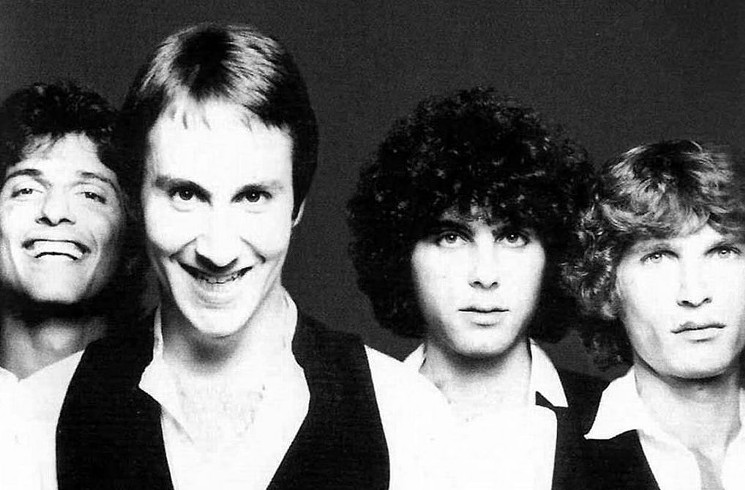
stays in your head. I wonder if The Knack knew they were creating such an
earworm back in 1979. Lead singer Doug Fieger wrote the song about his actual
girlfriend, Sharona. It’s basically about some guy trying to get with the hot
girl he’s obsessing about. Simple and to the point lyrics. But the beat,
stuttering vocal delivery, and guitar riffs make it more impactful. It’s also a
bit of a throwback itself, with a sound some have likened to the bands from the
British Invasion in the 60s. The track went to #1 on the Billboard 100 in the
summer of ‘79, staying there for 6 weeks. And it became The Knack’s best-known
song.
In the 80’s, Run-D.M.C. sampled “My Sharona” (without permission from The Knack) for their song “It’s Tricky”. The music goes perfectly with their rap, reinventing it for a new audience. Funny enough, I first heard “It’s Tricky” when I saw Can’t Hardly Wait in 1998. This just proves that movie soundtracks can introduce you to great songs from the past you wouldn’t have otherwise heard.
After the success of Bohemian Rhapsody, a second movie
about a flamboyant larger than life rockstar in the 70s and 80s might fall in
the shadow of what came before it. But I think it’s unfair to lump Rocketman
in with that other film. Especially because this movie is ten times better than
Bohemian Rhapsody. Like, glaringly better. But let’s move on.
Rocketman focuses on the personal life and career of
Elton John (Taron Egerton). He grows up in working class England in a very
unhappy home. His father is never around and when he is, he’s cold and distant.
His mother (Bryce Dallas Howard) isn’t much better. She thinks of her son as a
burden she must carry. Young Elton escapes his harsh reality through music.
He’s a piano prodigy, perfectly imitating any piece he hears. He pursues a
career in music as he matures, playing in a band and backing other artists. Elton’s
life changes dramatically when he meets Bernie Taupin (Jamie Bell). Bernie has the
lyrics to match up with Elton’s music. It’s a perfect partnership. Fame,
fortune, and amazing songs soon follow. And just as quickly comes the spiral,
with alcohol and drugs.
Even though Rocketman is considered a biopic it’s
really more than that. Much more fantastical, for sure. Elton and other
characters break into song and dance numbers all over the place. And his music
is used to establish the mood and further the plot of the movie. It feels like
an existing Broadway musical that was adapted for the screen. I was already a
big fan of his songs, but it was interesting to see them staged and performed
in new way here. “Tiny Dancer”, “Amoreena”, “Pinball Wizard”, and “Goodbye
Yellow Brick Road” are standouts. Director Dexter Fletcher creates a fun,
exciting spectacle for the viewer. The whirlwind of Elton’s life is captured
beautifully through his lens. And hats off (no pun here) to the fabulous costumes
designed by Julian Day. So many sequins!
I also enjoyed the fact that this was an R-rated movie.
Elton recently said, “I haven’t led a PG-13 life”. So, his movie shouldn’t shy
away from those elements. You get to see him exploring his sexuality, complete
with gay sex scenes. There’s also the heavy drug use. Sometimes a bit too
heavy. His downward spiral felt like it went on for far too long. But that was
the truth of his experience.
The heart of the film is Egerton. He’s in almost every
scene, carrying it all on his back. He doesn’t just slap on a wig and do an
imitation of Elton. He offers up his own interpretation of the icon. It’s a
strong performance. Huge points for actually using his own singing voice and
not lip synching…unlike other actors in recent biopics. Bell and Howard also
shine in their roles. Howard has a particularly tough job of making a heartless
woman seem human.
I walked out of the theatre with a renewed appreciation for
Elton and the path he took to get to where he is now. It’s an inspiring story
of highs, lows, self-acceptance, and perseverance. With a fantastic soundtrack
to accompany it.
You wouldn’t think that a real-life tragic event could make
a great musical, but The View Upstairs manages to do just that. The play is loosely
based on a horrific hate crime that took place in the 70s. At that time, the
UpStairs Lounge was a gay bar in the French Quarter of New Orleans. On June 24,
1973 an arsonist set a fire that caused the death of thirty-two patrons. Adding
to the devastation, victims were mocked and ridiculed by the community. In some
cases, bodies were not claimed by their family members for fear of people
learning they had gay relatives.
In 2013, playwright Max Vernon created The View UpStairs,
paying homage to these people lost in the fire. It would go on to be staged
Off-Broadway, around the US, and overseas.
In the musical, Wes, a young self-centered designer/entrepreneur/influencer,
purchases the building that once housed the UpStairs Lounge. After snorting a
good amount of cocaine, he’s suddenly transported back in time to when the bar
was open in 1973. Once there, he meets the regulars. Patrick, a good-looking
hustler; Buddy, a closeted 50-something piano player; Willie, the optimistic
matchmaker; Richard, a priest who holds services for the gay community at the
bar; Henri, the tough but motherly lesbian bartender; Freddy, a fabulous drag
queen; Inez, Freddy’s accepting mother; and Dale, a bitter resentful outsider.
Over the course of the show, Wes gets to know and love the
people he meets at the UpStairs, especially Patrick who he quickly falls for.
He loses his callous edge and begins to feel like he’s part of a family. Unfortunately,
as in real-life, things take a tragic turn.
I saw a production of the show at the New Conservatory
Theatre here in San Francisco and was quite entertained. The premise can be
hard to digest, but after awhile you go with it no matter how off-putting the
time travel hijinks can be. You can forget about that and let the music take
you on a journey. Some song standouts are “Are You Listening, God?”, “World
Outside These Walls”, and “Theme Song”. That last song in particular moved me
with its intensity.
It’s hard to single out one actor because they are such a
strong ensemble, building off each other. Everyone is given a song and an equal
chance to shine. I will say that Coleton Schmitto, Anthony Rollins-Mullens,
Linda Dorsey, and Jessica Coker gave particularly strong performances.
I also have to point out Devin Kasper’s impressive scenic
design. The theatre is quite small, but he was able to do so much with such
little space. You feel like you’re transported back in time, along with Wes, to
1970s New Orleans. Big points for the nude Burt Reynolds Cosmopolitan poster.
The show overall is a nice mix of fact and fiction. So, it
provides a history lesson without hitting you over the head with it. It honors
the victims of the tragedy and celebrates the LGBT community. The main message
is that of acceptance and finding your chosen family. Something that most
everyone should hear and take in.






 NostalGeoff