Shannen Doherty is one of my favorite actresses who has played two of my favorite characters in my all-time favorite movie and TV show. That’s a lot of love there. But it’s well earned. She’s a great actress who can do both drama and comedy effortlessly. She illustrated this in the 80s cult classic Heathers, playing the envious Heather Duke. And, again, when she took on the role of Brenda Walsh in the synonymous-with-the-90s series Beverly Hills 90210. She made each character memorable and fun to watch. Since then she’s had a steady career with acting, producing, and directing. Of course, I was happy to see her come full circle by playing a heightened version of herself in the BH90210 reboot two years ago. Outside of entertainment, Shannen continues to inspire as she wages a battle against breast cancer. She’s a survivor and icon. Happy 50th Birthday, Shannen!
Back in 1986, “That’s What Friends Are For” was named the #1 single of the year by Billboard. But the history of the track actually goes back a little further. Burt Bacharach and Carol Bayer Sager wrote “Friends” in 1982. At the time, Rod Stewart recorded it for the movie Night Shift. He did an ok job with it, but something was missing. That something being Dionne Warwick, Stevie Wonder, Elton John, and Gladys Knight.
The quartet got together to record their own version in 1985 as a charity single to benefit AIDS research. Adding their energy and retooling the arrangement made the song infinitely better. Dionne starts it off with her distinctive vocals, Stevie brings in the harmonica, Elton’s on the piano, and Gladys wraps it up strongly. Their voices and styles mesh really well together. It’s not surprising that this was a huge hit, winning the Grammy for Song of the Year. And even better, it raised much needed funds for a worthwhile cause. Keep smiling, keep shining.
Russell T. Davies’ It’s A Sin centers on a group of young friends contending with the AIDS epidemic in 1980s England. Ritchie (Olly Alexander) has left his family, whom he is not out to yet, on the Isle of Wight to explore his sexuality in London. He meets Jill (Lydia West) at Uni, where they share a passion for performing. Jill introduces Ritchie to the studious handsome Ash (Nathaniel Curtis). Along the way they meet Roscoe (Omari Douglas) who has run away from his overly religious Nigerian family. Rounding out the group is shy sweet Colin (Cullum Scott Howells), a Welsh tailor. The friends rent a large flat where they throw wild parties, entertain a revolving door of sexual partners, and enjoy a genuinely happy life together. As a viewer you quickly grow to care about these characters. That makes it difficult to watch as the shadow of AIDS falls over them.
In the early days, there was a lot of hearsay and misinformation about the disease. News outlets weren’t covering it and doctors weren’t informing their patients. Plus, in England, it was considered to be an American disease since it seemed to originate there. It makes sense that in an age without the internet, information wouldn’t be able to get out easily. Most films or TV show about the beginning of AIDS only focus on how people in the US dealt with it. I found this UK perspective to be very interesting. I was also surprised about the denial. Ritchie claims the disease is a hoax and there couldn’t be a “gay cancer”. He is soon proven wrong.
Davies does a great job of balancing the harsh reality of the era with five coming of age stories. You see these characters trying to figure out who they are and what they want out of life. In some cases, a brief life. Ritchie and Jill strive to become actors, Colin desperately wants someone to love, and Roscoe has a secret affair with a politician. Ash doesn’t have much of a storyline though. He should have been given more to do. On the flip side, I could have done with less of Ritchie. Yes, he’s the main character, but he’s also incredibly self-absorbed and infuriating. It made him hard to root for at times. Another complaint is that Jill is often reduced to the role of the supportive caretaker for the guys. She doesn’t have much of a personal life and never has a love interest. She deserved more development.
Despite these faults, Sin is a well-done series. The writing and direction are sharp and all of the actors are perfectly cast. There’s also a soundtrack full of 80s gems that enhance each episode. It’s a beautifully heartfelt show about a tragic period in history.
The legendary Cicely Tyson has passed away. She leaves behind a prolific award-winning career in film, TV, and the stage. She was a trailblazer who opened the door for other black actresses that followed. Moreover, she used her work to show how multidimensional black women are and their deserving of respect. I’ll remember her most for the dignity and poise she possessed. Like a regal queen. She always seemed sure of herself and what she wanted from the world. Recently, Miss Tyson completed her memoir, Just As I Am. I’m looking forward to reading it and learning more about this incredible woman.
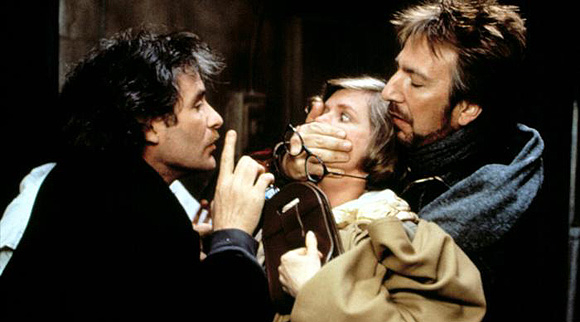
You never know what hidden “gems” you’ll find while scrolling through Hulu. The other night I stumbled upon a movie I’d never heard of before, The JanuaryMan. I see now why it was hidden since 1989.
It’s hard to describe TJM mainly because it doesn’t know what it wants to be. In the course of 97 minutes, which feels much longer, it goes from a thriller, to a romantic comedy, to a serious drama, to a farce, and around again. It’s whiplash-inducing. The gist is a serial killer is strangling women in NYC and the mayor (Rod Steiger) orders the police commissioner (Harvey Keitel) to do something about it. Since the mayor’s daughter (Mary Elizabeth Mastrantonio) was friends with the most recent victim, he’s invested in the case. The police commissioner implores his retired cop brother (Kevin Kline) to rejoin the force and catch the killer. Because he’s the only one who can?? Mmmk. He agrees to help, but there’s tension because his brother is now married to his former girlfriend (Susan Sarandon). A lot of time is spent on this dopey triangle where nobody is worth rooting for. Then it becomes a weak quadrangle when the cop starts seeing the mayor’s daughter. With all this extra fluff, you could almost forget a serial killer is running around the city. Perhaps the screenwriter did too.
If the film had stuck with one genre or tone it could have been decent. But instead it got turned into a confusing mess and the audience is forced to slog through it. Not even a cast full of Oscar winners/nominees can elevate this script. They’re just as lost as us, which makes for some conflicting acting styles. Someone really should have told Steiger to dial it down a notch. He’s acting with a capital A in a very B-level film.
I’m trying to think of one redeeming quality for this movie…Alan Rickman. He plays the cop’s eccentric artist friend who gets roped into helping him nab the killer. Rickman is fun to watch whenever he’s onscreen. The movie doesn’t deserve him.
“The Winner Takes It All” was the first single off ABBA’s Super Trouper album. It paints a vivid picture of the aftermath of a breakup. ABBA isn’t known for the depth of their lyrics (what the hell is “Super Trouper” about anyways?), so it’s interesting how detailed this song is. They find an inventive way of comparing a relationship to a game. “The winner takes it all/The loser’s standing small/Besides the victory/That’s her destiny”.
The music is beautiful, going between a soft piano arrangement and a midtempo beat. It makes you sad and reflective, but you want to dance too. The vocals are also great. My favorite part is Angetha’s soaring “alllllll” on the last verse.
“Winner” went to #1 in several countries. It was the group’s last top ten song in the US, which is odd considering there were strong follow up singles like “Lay All Your Love on Me”. Those people who didn’t get ABBA were the real losers.
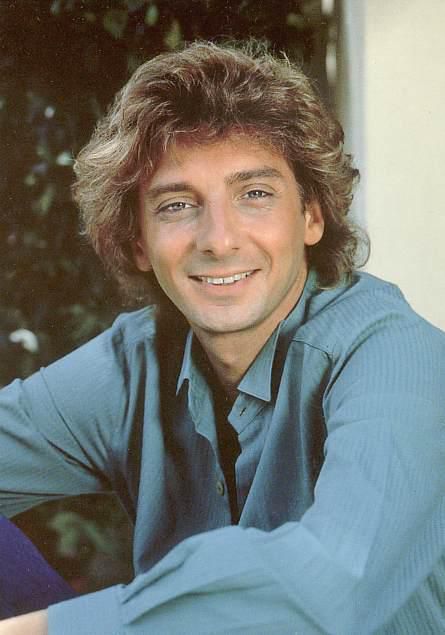
On this last day of October, I thought of a melancholy Barry Manilow song. He has a few of those, but “When October Goes” is most appropriate for today. The song was included on Barry’s 1984 album 2:00 AM Paradise Café. It’s sad and wistful as well as touching and beautiful. Like the other songs on the album, “October” was recorded live in one take. The simple stripped-down nature of the recording adds to the feeling of track. I also hate to see October go (really, this month flew by), but I enjoy this Manilow moment.
Before watching the documentary Killing Patient Zero, I knew very little about Gaetan Dugas. It turns out he was a loving son, brother, and friend. He enjoyed his job as a flight attendant for Air Canada. He was also openly gay and completely unashamed of his life. The one thing I thought I knew about Gaetan was completely wrong: he was not the man who inflicted AIDS upon the world.
At the beginning of the epidemic, doctors were desperate to figure out how this “gay cancer” was being spread. They theorized that sex was the cause and began to interview a sampling of gay men about their sexual history. Gaetan was one of these patients who generously cooperated with the CDC. Doctors produced a cluster study that featured him, amongst others, showing how the disease had traveled through sexual partners. Later, Gaetan was mistakenly labeled as “patient zero”, as if AIDS had originated with him. Reporter Randy Shilts latched onto this false story when he was doing research for his novel And the Band Played On. He took it a step further by writing that Gaetan had knowingly passed on the disease to the men he slept with. Once Shilts’ book was published, Gaetan, who had died by then, was put in the spotlight and his reputation was savaged.
Director/writer Laurie Lynd attempts to repair this damage in her documentary. Through interviews with healthcare professionals who were on the frontlines, he dispels the myth of a patient zero. They confirm that Gaetan was not the originator of AIDS. His friends talk about the warm caring man they knew. Someone who would not have purposely spread a disease. There’s even archival footage from a town hall meeting about AIDS featuring an outspoken Gaetan. The short video offers a much more accurate portrayal of him than Shilts’ book ever could.
I finished Zero feeling informed about the subject and also angry on his behalf. It’s horrible how this man was vilified by the public. I hope that more people will see the film and get an understanding of Gaetan’s true character. He and his loved ones deserve that vindication.
In 1985, Columbia Pictures released Joel Schumacher’s coming-of-age-in-your-20’s drama, St. Emo’s Fire. The movie focuses on seven friends who have recently graduated from Georgetown University in D.C. The gang includes philandering Alec (Judd Nelson), his steadfast girlfriend Leslie (Ally Sheedy), moody Kevin (Andrew McCarthy), wild Jules (Demi Moore), reckless Billy (Rob Lowe), loyal to a fault Wendy (Mare Winningham), and infatuated Kirby (Emilio Estevez). Their post-grad year is filled with strife, heartbreak, laughter, and reluctant steps toward adulthood. The critics roasted the film, summing it up as a bunch of yuppies whining about having to face the real world. One writer even gave the actors the unflattering nickname, The Brat Pack. But the audience loved the movie, making it an 80s favorite. Let’s revisit St. Elmo’s Fire.
Alec/Leslie/Kevin
After college, Alec begins to pressure Leslie about marriage. When she puts him off, his next natural step is to begin cheating on her. Oh, ok. Kevin is also in love with Leslie, but since he can’t be with her, he stops having sex altogether. Hence, his moodiness. When the truth comes out about Alec’s cheating, Leslie flees to Kevin’s place. He confesses his love for her and they sex it up all over his apartment. Leslie keeps her pearl necklace on the entire time. That’s extremely yuppie. Alec unexpectedly comes over to see Kevin and Leslie smacks him in the face with the news that she slept with his best friend. Drama. After this all goes down, Kevin assumes he and Leslie will be a couple now, but she puts the brakes on that. It’s interesting because we get both guys’ points of view about what they want, but very little from Leslie. It’s not until the end of the movie when she tells Alec and Kevin that she’s not going to be with either one of them and is instead choosing herself, that we finally hear her side. It would have been nice to see more of this. Sidenote, since Kevin stopped sleeping with women, everyone thinks he’s gay. Jules even theorizes that he’s in love with Alec. That would have been a much more interesting storyline. Later, after they both realized Alec was an asshole, Kevin and Leslie could have become a 1985 Will & Grace.
Jules
Jules was wild in college, but after graduation she takes it to a new level. For one, she can’t manage her money. Who knew getting an advance on your salary was a thing? She maxes out her credit cards, buying clothes and garish home décor. There’s a terrifying giant ceramic clown head in one scene. Then she has the brilliant idea to start sleeping with her boss, which ultimately leads to losing her job. This is followed by a cocaine spiral. In a misguided suicide attempt, she locks herself in her apartment and opens all the windows, letting in the freezing cold air. The stupidity of this proves she’s really just crying out for help and not trying to end it all. Billy is able to comfort her back into reality. She tells him that she’s so tired. Yes, dear, adulting is hard. Now close your windows, find a new job, and get on with your life. Also, throw away that scary ass clown head.
Kirby
This is the nuttiest story in the movie. Basically, Kirby went out on a date with Dale (Andie MacDowell) back in college. One date that led to nothing. Four years later, he runs into Dale. She barely remembers him, but Kirby is still hooked on her. This fixation escalates. He follows her to a party, where he creepily watches from the window. Then he crashes the scene and tells her he’s obsessed. No shit. Instead of calling the cops, Dale invites him over to her place. Girl, really? She tries to dissuade him from his infatuation. Instead, Kirby has tantrum, because things aren’t going his way and storms out. Later, he throws a big party to impress Dale, but she doesn’t show up. Incensed, he tracks her down at a cabin in the snowy mountains that she’s sharing with her boyfriend and throws another fit. Again, instead of calling the authorities on this psycho, she invites him in after his car gets stuck in the snow. The next day, when Dale is politely seeing Kirby off, he kisses her. Instead of telling her boyfriend to kick his ass, she actually swoons. WTF? Kirby speeds off, thrusting his fist in the air triumphantly. I truly cannot figure out what we’re supposed to think about this story. Stalking is romantic? If you pressure a woman enough into liking you, she’ll eventually cave? This behavior isn’t acceptable and yet everyone in the movie goes along with it. Not me!
Billy & Wendy
Out of everyone in the group, Billy has the hardest time letting go of college and stepping into the real world. It’s funny because he has the most adult attachments. A wife and baby. Instead of trying to gain some stability for them, he remains selfish and irresponsible. He loses jobs as soon as he finds them and gets drunk every night. He’d rather run around with his friends than grow up. It’s a sad Peter Pan situation. Wendy, unfortunately, enables Billy’s behavior. She’s in love with him and can’t call him out on his ridiculous behavior. Even after he gets drunk and totals her car, nearly killing her, Wendy forgives him. I found that plot point to be really stupid. But not as bad as Wendy offering her virginity to him. Sigh. So, Billy realizes he needs to get his shit together. He’s going to divorce his wife so she can be with a guy who actually wants to be a husband. And, Billy is moving to NY. If you can make it there…well he probably won’t. As a going away gift, Wendy gives him her V-card. Now, I know Billy is incredibly good looking (this is prime Rob Lowe hotness here), but he’s still a tool. He doesn’t deserve your “flower”, Wendy.
**BONUS**
The theme song to the movie, “St. Elmo’s Fire (Man in Motion)” is pretty awesome. It incorporates the themes of the movie (growing up, finding your future) in one jazzy-pop-rock moment. Plus, the video, starring singer John Parr and his enormous fluffy hair, is perfectly 80s.
Director Joel Schumacher passed away yesterday at the age of 80 after a battle with cancer. He started out as a costume designer (The Last of Sheila) in the 70s before transitioning to screenwriting (Sparkle, The Wiz). In 1981, he made his directorial debut with the comedy The Incredible Shrinking Woman. Looking at his IMBD page, you can see how eclectic his directing career was. There were big blockbusters (BatmanForever), dramas adapted from books (A Time to Kill, The Client), thrillers (Flatliners), and even a musical (The Phantom of the Opera). He didn’t allow himself to be pigeonholed as one type of director, but instead made the movies he enjoyed.
I’ll remember Schumacher best for The Lost Boys. It’s one that I have to stop and watch whenever I come across it on TV, which is often. He was able to put together the perfect mix of horror and comedy. It’s a very fun film.
I’m looking forward to re-watching my favorites from Schumacher and discovering his other films that I haven’t gotten around to seeing.








 NostalGeoff