Naomi Campbell is beyond fierce. Since the 1990s, she has defined the term supermodel. She’s landed the best magazine covers, walked in every fashion show, and was featured in George Michael’s iconic “Freedom 90” video. Her face and walk are wondrous. Plus, she has that attitude that you want from a diva. In an industry that values youth, Naomi has defied expectations well after her supposed expiration date. Today, at 50, she’s still at the top of her game.
How to Build a Girl is a quirky endearing coming of age movie. Set in mid-90s England, it concentrates on sixteen-year-old outcast Johanna Morrigan (Beanie Feldstein), who is continually bullied at school. While her family is supportive, they are pretty unstable. Plus, the only “people” she can talk to are the pictures of famous figures on her wall that come to life in her fantasies. She’s desperately yearning for something to happen in her life and take her out of this mess. That something arrives in the form of a job at an indie rock magazine.
At first the douchey all-male staff dismisses Johanna, but she manages to win them over with her genuine writing talent. She takes it a step further by reinventing herself as Dolly Wilde, a brash, biting music critic. Armed with a new persona and look (shocking red hair and even louder outfits), Johanna’s star quickly rises. But she soon realizes that she doesn’t necessarily like the girl she has become.
The movie is adapted from Caitlin Moran’s memoir and her life makes for an unusual yet enjoyable story. You root for Johanna to succeed and cringe when she falls on her face. Feldstein is extremely charming in the role. She brings both heart and the humor to her character. I also thought it was great that director Coky Giedroyc wasn’t afraid to show Johanna as a sexual person. She hops from man to man, like a sexual anthropologist. Usually with plus-sized women in movies, their sexuality is downplayed or ignored. Giedroyc puts it all out there in a frank manner.
I liked the overall message of the film: being comfortable in your skin and owning who you are despite what others think. Johanna sees that she has built herself up into someone she doesn’t recognize, so she breaks it all down and rebuilds. She ultimately becomes the person she is most proud of. It’s something anyone can identify with, in your teen years and beyond.
*Side Note*
It wasn’t until a few days after seeing Girl that I realized how much it reminded me of the 1994 comedy Muriel’s Wedding. They each feature outrageous young women that don’t fit in with the popular crowd and decide to make themselves over into someone new. Both protagonists have oddball families. Plus, music (ABBA, indie rock) is featured heavily. Feldstein’s Johanna also has a similar affable energy as Toni Collette’s Muriel. The two films would make a great double feature. Maybe at a drive-in.
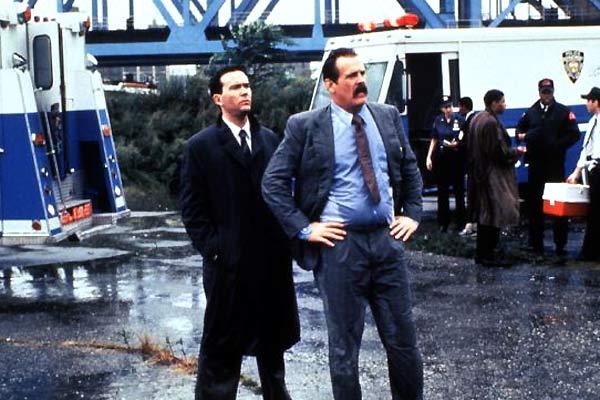
In 1990, prolific director Sidney Lumet released his latest feature film, Q&A. The plot focuses on Michael Brennan (Nick Nolte), a New York City cop who has murdered a criminal in cold blood and made it look like self-defense. A young rising district attorney, Al Reilly (Timothy Hutton), is assigned to what he’s told will be a simple case. As he digs deeper, he discovers Brennan’s complicated misdeeds. The veteran cop bullies and intimidates witnesses, covers his tracks with lies, and ultimately kills to keep his secrets. He’s empowered by higher ups in the system who look the other way or mobsters who provide the additional muscle he needs. But Al refuses to enable Brennan. He’s committed to upholding the law, even if it could get him killed.
During his investigation, Al encounters Bobby Texador (Armand Assante), a notorious drug boss who witnessed the murder. He’s a colorful character that just so happens to be dating Al’s ex-girlfriend, Nancy (Jenny Lumet). Al still loves her and regrets the breakup. This is actually one problem I found with the movie. Every time Al and Nancy are on screen together the movie grinds to a halt. Nobody cares. The audience for this film didn’t come to see a stale love story. The better interactions are between Hutton and Nolte or Hutton and Assante. They are all excellent in their roles and have great chemistry.
Lumet adapted the screenplay from Edwin Torres’ novel of the same name and it’s easy to see why he was drawn to the material. The book uses themes that the director had explored before in his movies (Serpico, Prince of the City, The Verdict): corruption, abuse of power, and the little guy fighting back against it all. Lumet expertly weaves a David & Goliath story into a crime thriller, adding complexity to the gritty action. The film also touches on issues of race, class, and sexuality. The last one, specifically how the LGBT characters are treated, could have been executed better though.
Q&A didn’t perform well at the box office or get a lot of acclaim from the critics, but I find it to be an interesting film. Even though Lumet has gone down this road before he manages to cover the material from a fresh perspective. It’s still worth taking a look all these years later.
In 1978, Rose Royce came out with “Wishing on a Star”, the third single off their album Full Bloom. The ballad wasn’t a big hit for them, but the r&b group had many other memorable singles, like “Car Wash”. Flash forward to 1992, when the appropriately named The Cover Girls released their cover of “Star”. It went to #9 on the Billboard 100 and was the 49th biggest single of the year.
Each version of the song is a product of its time. Rose Royce’s original is a soulful 70s ballad with lead singer Gwen Dickey’s rich vocals and the live band accompanying her. The Cover Girls’ rendition is very produced, which was common in the 90s. It also has more sass.
I actually heard TCG’s “Star” first when I was growing up. I distinctly remember it playing in the background of an episode of Beverly Hills 90210, so it feels closer to my nostalgic heart. But if I have to pick the best version of the song, I’ll go with Rose Royce. Gwen’s voice is better and I like RR’s subtly.
Mariah Carey isn’t a fan of birthdays so instead she chooses to celebrate anniversaries. Why? Because she’s a diva and she can. In honor of the occasion, here’s the video for a classic MC track, “Honey”. Wouldn’t we all like to dive into a pool, race away on a jet ski, and do a little dance number with a bunch of sailors right about now? Happy Anniversary!
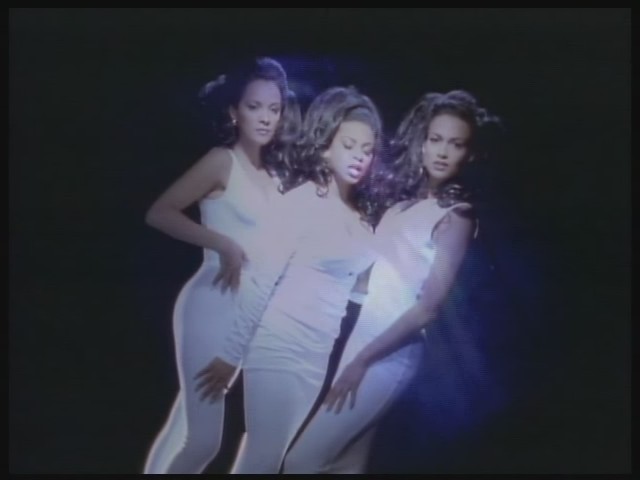
On this day in 1992, En Vogue released “My Lovin (You’re Never Gonna Get It)”, the first single off their Funky Divas album. To put it in 90s terms, this song was bangin’! You had the perfect harmonies of Dawn, Terry, Maxine, and Cindy, a heavy James Brown sample, and some New Jack swing. It was a recipe for success, peaking at #2 on the Billboard 100. The sassy 60s meets 90s music video also captured the fun dynamic of the group and won them a couple of VMAs. Woah woah woah woaaah!
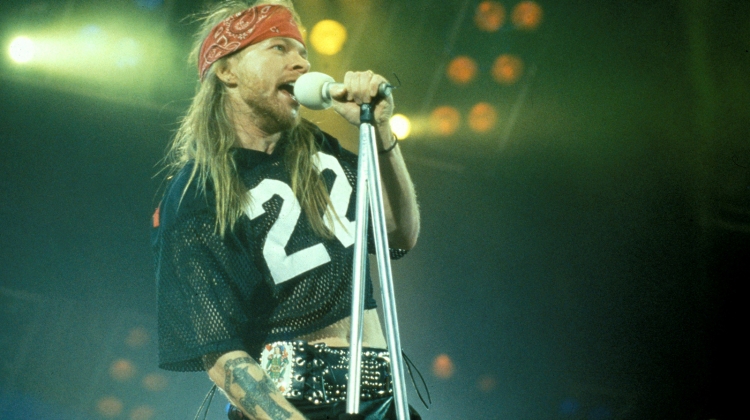
Axl Rose, the lead singer of Guns N’ Roses, turns 58 today and I have some thoughts. Like, how the hell is he 58? That’s insane and makes me feel old. Or, how did he make it to 58? This is a feat considering his health issues over the years. Plus all the drinking and drugs he did. But, on the other hand, good for him for making it this far. He’s still rocking out with GNR. They’re actually going on a stadium tour this summer. Which leads to another question: are they considered classic rock now?
Axl’s birthday gives me an excuse to pay tribute to my favorite GNR song & video, “November Rain”. There’s a wedding, a funeral, supermodel Stephanie Seymour, gravely Axel vocals, an orchestra, Slash doing an epic guitar solo next to a church, and a lot of rain. It’s pretty awesome.
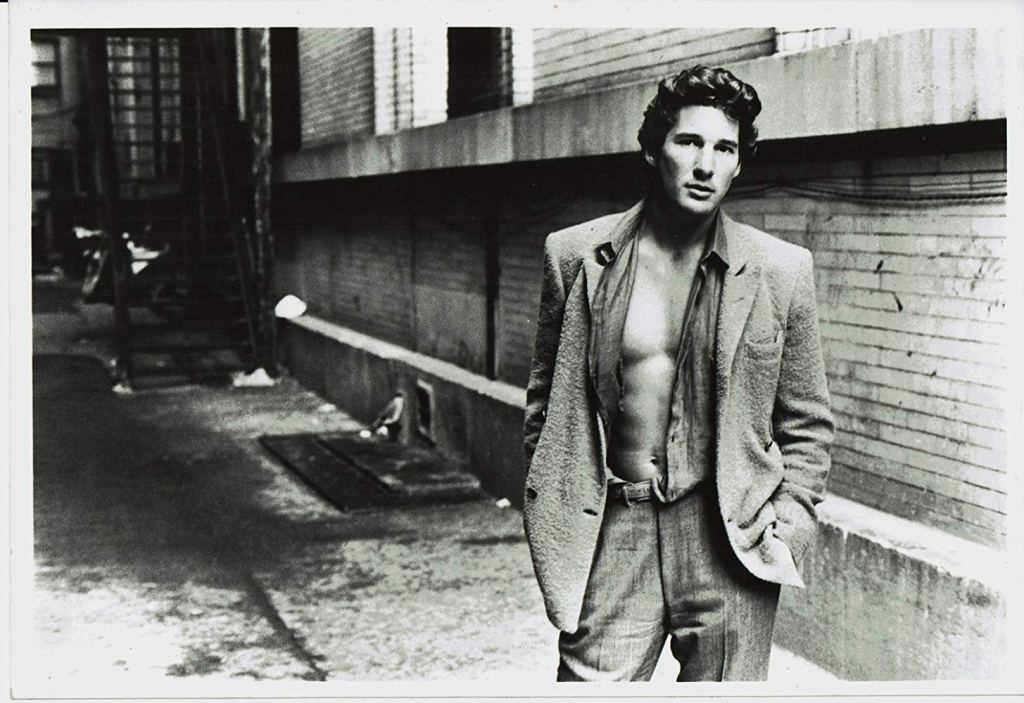
Richard Gere has coincidently starred in two iconic movies that centered around prostitutes in LA. American Gigolo came out in 1980 followed by Pretty Woman ten years later in 1990. Until recently when I re-watched both I didn’t stop to think about the parallels between the two. Or how they both feature Hector Elizondo. Let’s compare and contrast for their anniversaries.
Story
American Gigolo tells the story of Julian Kaye, a high-class male escort. He’s refined, elegant, classy, wears designer suits, and speaks multiple languages. His clients, wealthy older women, continually seek out his services. Things are going well for Julian until he is set up with a bad trick. That woman ends up dead not long after their encounter and her murder is pinned on him. In the midst of all this he meets Michelle (Lauren Hutton), a rich politician’s wife. They fall for each other as he attempts to clear his name.
Pretty Woman finds Gere playing Edward Lewis a powerful corporate raider that happens upon Vivian (Julia Roberts), a prostitute, one night on Hollywood Blvd. They have an instant connection and he hires her as his escort for the week. Rough around the edges Vivian is out of place in his high society world. Despite their differences, though, they grow closer and take their relationship beyond a business arrangement.
Love
Romance takes a back seat to the mystery in Gigolo. It makes sense. This is a thriller, not a love story. But, the relationship between Julian and Michelle could have been developed more. They meet, chat for a few minutes, and instantly she’s obsessed with him. At one point she stalks him through the streets of Westwood. It’s unclear why she is so drawn to him, aside from his looks and charm. We never know her motivations because her character is so paper thin. She exists primarily to prop up Julian. After he gets framed, Michelle risks everything to help prove his innocence. She is the only one who cares about him, but the film doesn’t give us any reason to care about her. For his part, I think what makes her most desirable to Julian is her extreme devotion to him.
The relationship between Edward and Vivian is at the forefront of Woman. It’s actually a great story about two people falling in love. Over the course of the movie they share intimate details about themselves and get to know each other. Edward tells Vivian about his heartless father leaving his family and how that shaped him as a person. She responds by letting him in on her rocky upbringing. They feel comfortable being vulnerable with one another. There’s also the romantic dates and beautiful love scenes. At one point, Vivian breaks her rule about not kissing a client on the mouth because by that point Edward is no longer just another number.
Interestingly, in both movies Gere’s characters think they don’t need love or are incapable of maintaining a real relationship. Julian sees women as transactions. He’s not looking for any attachments until Michelle comes along and changes his thinking. But he pushes her away after he’s arrested for murder, telling her he’s not worth ruining her life. He doesn’t want to drag her down. She ignores him and stays by his side, proving to him that he is worthy. Similarly, because of his past family drama Edward doesn’t make room in his life for love. In the opening scene of the film his girlfriend dumps him because he won’t make her a priority in his life. He nearly ruins things with Vivian too. When she tells him that she loves him, he doesn’t share how he really feels. Instead he offers to make her a kept woman, as if money is what she wants. He finally gets a clue at the end of the movie and shows Vivian how much he loves her.
Supporting Players
As mentioned earlier, Hector Elizondo is a prominent player in both films. In Gigolo he’s Detective Sunday, the cop overseeing the murder investigation. He doggedly pursues Julian, eager to find him guilty. Woman finds him playing Barney Thompson, the manager of the Beverly Hills hotel where Edward is staying. He takes pity on Vivian when she’s shunned by the snooty Rodeo Drive sales ladies, becoming her confidant. In both instances, Elizondo brings something interesting to what could have been two ordinary roles. A dash of humor and some flair. Also, in the case of Woman, a pretty obvious toupee.
These films have some truly horrible villains. There’s Leon (Bill Duke) the vengeful pimp. Julian left him years before the movie starts and he’s been pissed ever since. Spoiler alert…Leon is the one who is framing Julian. Woman has Stuckey, played with an incredible amount of sliminess by Jason Alexander. He’s Edward’s lawyer who can’t stand it when his client wants to focus less on making money and more on love. At one point, Stuckey tries to rape Vivian. Luckily, Edward arrives and kicks his ass. He actually ends up better off than Leon who gets pushed off a balcony. He had it coming.
Also, old Hollywood star Ralph Bellamy makes his last film appearance in Woman as the owner of a company that Edward is trying to take over. It’s a small part, but not a bad way to end your career. Plus, Bellamy was probably glad he hung around long enough so that Disorderlies wasn’t his last film.
Soundtracks
Gigolo begins with Julian driving down the California coast in his Mercedes as Blondie’s “Call Me” blares from the radio. Of course, the title and lyrics are prefect for a movie about a call boy, but the track also captures the feel of the early 80s. A little bit of leftover disco with some rock sprinkled in. Pieces of “Call Me” show up in the movie’s score. Sometimes upbeat, sometimes eerie. It’s a versatile piece of music. Famed disco producer, Giorgio Moroder, composed the song and the rest of Gigolo’s soundtrack. The album went to #7 on the Billboard 200 and “Call Me” spent six weeks at #1 on the Billboard 100. I’m also a fan of the Cheryl Barnes song “Love and Passion” that plays in a disco scene. It’s a fun track.
You can’t think of Pretty Woman without hearing Roy Orbion’s classic “Oh Pretty Woman” that inspired the film’s title. Originally released in 1964, the song was launched back into the zeitgeist when the movie came out. It pops up during one of the best shopping montages in cinematic history. Not an exaggeration, I love seeing Vivian shop. The soundtrack would go on to be certified triple platinum and produce hits like Roxette’s “It Must Have Been Love”, Natalie Cole’s “Wild Women”, and Go West’s “King of Wishful Thinking”. Classic early 90s tunes.
Legacy
At the time of its release Gigolo was a novel concept. You didn’t find too many narratives about male prostitutes back them. Moreover, you didn’t often see men sexualized in the way that the film does. Director Paul Schrader celebrates Gere’s beauty in almost every scene, training the camera on his amazing face and body. This was the first mainstream movie where the male lead does full frontal nudity. And it’s not just a quick flash. So much of Gigolo is about visuals really, from the fashion to the lighting to the ornate sets. I wish there was an equal amount of substance. Yes, the film is beautiful to look at, but it often feels empty. The writing is clunky at times and the mystery, in particular, is weak. Despite these faults, Gigolo is an interesting time capsule from the early 80s.
Woman’s premise doesn’t seem like something that you could make an endearing romantic comedy out of. A fairytale love story between a prostitute and her john? That goes beyond your typical hooker with a heart of gold story. But it works. The star power from the leads, their chemistry, and a winning screenplay all come together nicely. Director Gary Marshall crafted a timeless film that holds up years later. You could come across Woman on TV (probably Bravo on a Sunday afternoon) and be just as engaged as audiences were back in 1990. The sign of a true classic.
In the summer of 1996, I was sixteen, living in Atlanta, and about to start my senior year of high school. I also had a job as a clerk at Kroger Video, the local grocery store version of Blockbuster. Yes, that was a thing. I spent most of my days working or watching movies that summer. But, like everyone else in town, I was captivated by the Olympics coming to Atlanta. It was a big deal to be chosen as the host city and everyone was glued to the action. Then things took a dark turn with the bombing in Centennial Park. Having experienced this all firsthand, I was particularly interested in the new movie, Richard Jewell, that depicts the events.
Richard Jewell (Paul Walter Hauser) was a security guard working at Centennial Park during the Olympics. By chance he discovered a suspicious backpack in the park that turned out to be a bomb. Jewell helped to get hundreds of people to safety before the bomb went off. He was declared a hero, until an overzealous FBI agent (Jon Hamm) zeroed in on him as a suspect. Then an unscrupulous journalist (Olivia Wilde) got ahold of the story and ran in on the front page of the Atlanta Journal-Constitution. Jewell suddenly went from hero to villain.
Hauser does an excellent job of portraying this wronged man. It’s sometimes a subtle performance, but still very effective. He makes you feel angry for his character as he’s targeted by the authorities. Sam Rockwell plays Jewell’s lawyer and brings some much-needed comic relief. Kathy Bates turns in a terrific performance as Jewell’s mother. She is the heart of the film, showing how this ordeal affected those closest to Richard.
What’s most interesting about this story and the movie is how law enforcement and the media, with little to no evidence, railroaded this man. They invaded his home, slandered him, and made his life unbearable. It was all for nothing because he was innocent. Side note, that’s not a spoiler if you remember the story or visit Wikipedia. Six years after the attack, the actual bomber confessed. But for many, Jewell is probably who comes to mind when they think of the bombing. It even took me a second to remember that he didn’t do it when I heard about this movie coming out.
My one complaint is that this history lesson is told with broad strokes and not a great deal of depth. It’s more informative than impactful. Also, Clint Eastwood’s direction comes off as flat. Even the moment when the bomb goes off seems anticlimactic. Similarly, Ham and Wilde’s characters often come off as one note villains. Eastwood could have taken more time to explore their characters and motivations. Despite these faults, I liked the movie and the opportunity to revisit a significant moment from Atlanta’s past.
Christmas came early this year. Mariah Carey’s holiday classic, “All I Want for Christmas is You” hit no. 1 on this week’s Billboard Hot 100 chart. It’s an amazing feat considering the song came out in 1994. Every year it has grown in popularity, landing at no. 3 last season. It was only a matter of time before it would get to the top spot. Even better, this is Mariah’s 19th number 1, more than any other solo artist and one less than The Beatles. She has also headed the chart in three different decades now. She truly is an amazing artist. And some may say the Queen of Christmas.







 NostalGeoff