It’s rare to see a current film set in the past that feels
so incredibly authentic to the time period it’s trying to recreate. I
experienced this recently with the new feature Motherless Brooklyn. Instantly,
the audience is fully immersed in the 1950s with the cinematography, production
design, and costumes taking you into that world.
The film, set in New York circa 1957, focuses on Lionel (Edward Norton) a young man working at a detective agency headed by his idol, Frank Minna (Bruce Willis). At the start of the movie, we see Frank investigating a secret case that ultimately gets him killed. Lionel takes it upon himself to solve his boss’ murder. Over the course of a few days, he follows clues that lead him down a dark trail through a city filled with complex characters. There’s an extremely corrupt public official (Alec Baldwin), a brilliant engineer with secrets (Willem Dafoe), and an activist (Gugu Mbatha-Raw) fighting for the disenfranchised citizens of New York. They all tie together in a series of twists and turns.
Norton wrote, produced, and directed Brooklyn, a
passion project that has been in the making for 20 years. You can tell that he
has loved and nurtured this film for decades. The writing is intelligent and
the direction is precise. He also delivers on the acting front. Lionel is an emotionally
scarred man with Tourette’s syndrome. He can’t control his ticks or the random offensive
words that come out of his mouth. A lesser actor could have hammed this up and
gone really big. But Norton makes Lionel a fully formed person and not a caricature.
The supporting players also enrich the material. Mbatha-Raw, in particular, is
quiet yet effective in her portrayal of Laura.
The book, of the same name, that Brooklyn was adapted
from came out in the 90s and was set in that decade. Norton made the decision
to change the time period because it worked well with the 50s film noir feel of
the story. It was great choice. This film is on par with the classics that were
actually released in that era.
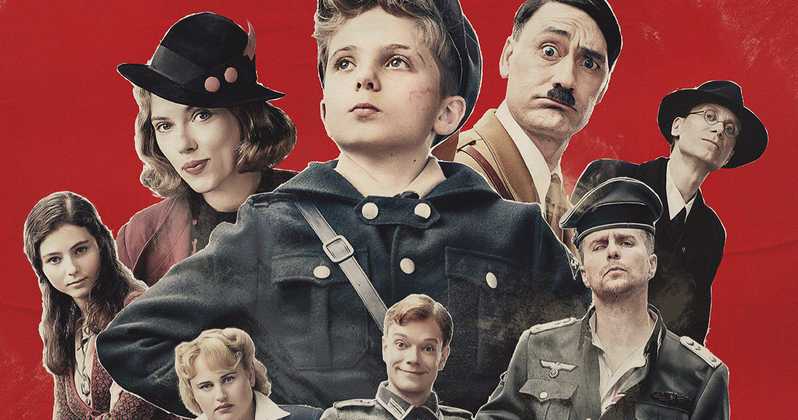
JoJo Rabbit is both a dark satire and a heartwarming
coming of age film. It’s hard to imagine those two very different genres coming
together, but writer/director Taika Waititi makes it work.
The film centers on JoJo Betzler (Roman Griffin Davis), a
ten-year-old growing up in Germany during World War II. He is obsessed with the
Nazi party, so much so that his imaginary friend is Adolf Hitler (Waititi
pulling triple duty). This goofy childish version of Hitler urges JoJo on when
he feels discouraged or scared. He’s a helpful imaginary friend, aside from being
evil of course.
JoJo’s mother, Rosie (Scarlett Johansson), does not share
his political views. He discovers that she’s hiding a teenage Jewish girl, Elsa
(Thomasin McKenzie), behind a wall in their house. He threatens to turn Elsa
in, but she warns him that Rosie will be punished as well if that happens. JoJo
reluctantly accepts Elsa in his home and learns more about her and Jews in
general. He begins to question the teachings of the Nazi party as he forms a
friendship with someone who is supposed to be his enemy.
JoJo marks Davis’ film debut. It’s impressive that
such a young actor in their first role would be able to handle it so expertly.
He’s in almost every scene and carries himself like a seasoned professional.
McKenzie and Johansson are equally strong. There’s also a great supporting
performance from Sam Rockwell as JoJo’s eccentric instructor.
Over the course of the film we see JoJo grow in ways he
wasn’t expecting. Having Elsa thrown into his life allows him to see another
viewpoint and to become more compassionate. It’s a touching evolution. Then
there’s the satire where Waititi shows how insane and ridiculous the Nazis can
be. Some audience members made be offended by having a wacky version of Hitler,
but his ideologies are shown to be dangerous as well as buffoonish. You can
laugh at him and be repelled at the same time. Waititi expertly combines a mix
of emotions and tones in order to create an engaging film.
There is a lot of WTF in The Lighthouse. Or should
that be WTF’ery? In any case, I left the theatre wondering what exactly I had
just seen, which isn’t necessarily a bad thing.
The story, set in the 1890s, begins with a simple premise. Ephraim Wilson (Robert Pattinson) takes a job, on a desolate island, as an assistant to a veteran lighthouse keeper, Thomas Wake (Willem Dafoe). It’s rough work with Wake ordering his employee around, admonishing him for every little thing. At one point, Wilson complains that he feels more like a slave. Plus, he’s bitter that Wake won’t let him up to the light, keeping that level of the house locked up. At night, Wilson sees his boss, stripped naked, basking in the glow, which really makes you wonder what’s up there. After four weeks, the men are supposed to get off the island, but the ferry never comes and the storm picks up. They’re stranded in it. Huge amounts of hard drinking, seagull attacks, hallucinations, possible mermaid interactions, and angry masturbation ensues. It’s a hodgepodge of crazy.
At times I wondered if co-writer/director Robert Eggers was throwing in weird stuff just for the sake of being weird. As if that would add depth to the film. For me, the less insane moments were actually more meaningful. Just seeing Wilson and Wake exist in such close quarters. It’s interesting to see these two characters, trapped together, with no choice but to reveal themselves to one another. Over drunken conversations they begin to peel back the layers, sharing truths. It’s melancholy at times and pretty funny in other instances. Pattinson and Dafoe are evenly matched and share a great cantankerous chemistry. You don’t know what their characters will do to one another, which can be very suspenseful. Dafoe definitely deserves a nomination for his performance.
The film itself is shot beautifully in black & white. It looks like a great old movie you’d see on TCM with its cinematography. Eggers creates an ominous dark mood with his claustrophobic direction, use of light, and sound. You feel like you’re on that island with these men, living in the same harsh conditions.
Getting back to the WTF factor, yes, I could have used less of
it and a more straightforward storyline. But at the same time, it did add to
the overall experience of the film. And I was typically entertained even if
that came with confusion.
The Halloween movie series is one of my favorites in the horror genre. I always found Michael Meyers’ murderous rampages in Haddonfield to be pretty scary. The first two movies are the best. The third takes a weird, yet interesting turn. Part four brings back Michael while giving the series some new blood. But then you get to Halloween 5 and things start to go off the rails. Granted it’s not as bad as 6 or 8. And don’t even get me started on the horrific (not in a good way) Rob Zombie remakes. But 5 is still plain bad. For its 30th anniversary let’s get into why it sucks.
Michael’s back…again
The series could have stopped at part 4. Michael was presumed
dead and his young niece, Jamie (Danielle Harris), had seemingly taken his
place at the end when she stabs her mother. It was a full circle moment,
calling back to the opening of the original Halloween. But this addition
was very successful and another sequel sprang up. We discover that after being
shot multiple times and falling down a mine shaft, Michael survives and crawls
into the river undetected. Then he stumbles upon an old hermit in a shack and
passes out. For a year. He was sleepy. So, we’re to believe the hermit, with
limited means, somehow nursed Michael back to health and he woke up stronger
than ever? Alright.
Jamie is suddenly psychic
Somehow Jamie develops a psychic link with Michael. When he
awakens after his long nap, she feels it. When he kills somebody, she knows it
and freaks out. But she’s also a mute now so she can’t really tell anyone
what’s going on with her not-so-dead uncle. This leads to a lot of grunting and
spazzing out throughout the film. It’s eye rolling. Jamie and Michael don’t
need to be psychic friends.
Rachel gets killed early
Technically Jamie is the final girl of part 4. But Rachel
(Ellie Cornell), her adopted sister, is kinda one too. She was a bit more
active than Jamie because she was older.
Rachel protected her little sister, fell off a roof, and ran Michael
down with a truck. Very badass. So, when he stabs her in the chest at the
beginning of 5, it’s disappointing. Especially because that leaves us
with Tina (Wendy Kaplan). Ugh.
Tina is the worst
With Rachel gone, her friend Tina is left as Jamie’s
caretaker. The character is annoying as hell. Loud, boisterous, and zany in a
way that’s supposed to be endearing but because of the actress’ limitations
comes off as nails on a chalkboard. Plus, she’s an idiot. Jamie warns her that
she’s in danger, but Tina ignores her and runs off to a party. Girl, stay at
home and lock the doors. You almost want her to die. And she does, while trying
to save Jamie. At least she served one purpose.
The Keystone Cops
The screenwriters decided to inject some humor into the film
by adding a pair of bumbling police officers. They even have their own
clown-like theme music. Oh wow, these cops are so dumb. Isn’t that funny? No,
no it is not. I’m ok with a little levity, but nobody needs a Laurel &
Hardy routine in the middle of their horror movie. Also, I want my cops to be
smart and capable. And willing to take a knife to the gut so I have some time
to escape from the crazed killer.
Loomis is so extra
Donald Pleasence’s Dr. Loomis was never a subtle character.
He runs around in five different Halloween movies crying about the evil
that is coming. Like a macabre Chicken Little. But in this film, he takes it up
a notch, throwing a fit in every scene because nobody believes his claims that
Michael is alive. Pleasence chews on the scenery for breakfast, lunch, and
dinner. It’s as if director Dominique Othenin-Girard told him to go even bigger
after every take. And then his character has the brilliant idea to lure Michel
to the old Meyers house, using Jamie as bait. He’s lucky they weren’t both
killed. Calm it down, doc.
That ending
Throughout the film we see the mysterious man in black (not
Will Smith), with the same tattoo on his wrist that Michael has on his, creeping
through Haddonfield. After Michael gets carted off to jail, the mystery man
shows up at the police station, kills everyone inside, and busts Michael out.
What? Who the hell is this guy? And who thought this would be a good ending?
Bright spot
The best moment of the movie is when Jamie is trying to
escape Michael while crawling up a laundry chute. It’s a tense claustrophobic
terrifying scene. If only the rest of the movie could have been as good.
Posted at 10:52 pm by Geoff, on September 26, 2019
I completely avoided Downton Abbey during its initial
run on PBS, assuming it was just another boring period piece. But recently, I got
curious and took a peek. One episode lead to all six seasons and now I’m a fan.
Just in time for the film adaptation that came out this month.
For those not in the know, Downton tells the story of
the well-to-do Crawley family living in a lavish estate in early 20th
century Yorkshire, England. There’s patriarch Robert Crawley, Earl of Grantham;
his wife Cora, Countess of Grantham; their daughters, Lady Mary and Lady Edith;
son-in-law, Tom; Violet, Dowager Countess of Grantham; and Cousin Eleanor. The
downstairs staff at the estate is also featured. Butler Thomas Barrow; head housekeeper
Mrs. Hughes; the cook, Mrs. Patmore; her assistant, Daisy; former butler and
Mrs. Hughes’ husband, Carson; Anna, the ladies’ maid and her husband John, the
valet; Cora’s maid, Baxter; nutty sometimes-footman, Molesley; and footman,
Andy.
Over the course of the series, the denizens of Downton, ran
through several storylines. Romance, betrayal, adventure, and tragedy to name a
few. Show creator, Julian Fellowes, manages to craft a captivating story for
the film that picks up where the series left off. The King and Queen of England
are coming to Downton for a visit, throwing the entire household into a tizzy
as they get ready for the grand arrival. When the royal staff appears, with the
intention of pushing the Downton servants out of the way, the drama (and
hijinks) really kick in.
Fellowes and director Michael Engler continue with the
familiar, while driving things up a notch. The world becomes a bit bigger and
cinematic. An assassination attempt, a mysterious heir, and an underground gay
night club are added to the mix. But at the heart of it are these characters
that the fans love. Each gets a chance to shine over the course of the 2hour
film. I was particularly happy that gay villain turned fan-favorite, Thomas,
was able to take a small step out of the closet. Widower Tom had a chance for a
new beginning, as well. Plus, there were more witty zingers from the Dowager
Countess. You can’t have too much of Dame Maggie Smith.
I enjoyed spending a little more time in Downton with this
new adaptation. And I’m quite glad I finally took a chance on a “stuffy”
Masterpiece Theatre series.
The setup for Hustlers isn’t anything new. This is The
Big Short meets Goodfellas meets Robin Hood meets Showgirls.
But despite the lack of a fresh concept, it’s still an entertaining movie.
The story, based on a New York magazine
article, follows newbie stripper Destiny (Constance Wu) at a NYC club circa
2007. She stumbles until she meets Ramona (Jennifer Lopez), the seasoned star
of the club. The pro takes Destiny under her wing, teaching her how to dance
and seduce the customers (without actually giving anything away). The money
pours in until the stock market crashes in 2008. Everyone loses and has to
start over. Cut to 2011, where a struggling Destiny, who quit dancing after
becoming pregnant, reunites with Ramona. This time her mentor has a new lesson:
luring, drugging, and stealing from rich Wall Street guys. It doesn’t take long
before the two friends have a ring of girls scamming their way through
Manhattan. Once again, the (illegal) money flows, until the shit hits the fan.
The standout in the movie is Wu. She works to make
us sympathize and root for Destiny, even when she’s doing horrible things. There
has been Oscar talk about JLo’s performance and I have no clue where that’s
coming from. It’s not that she isn’t good. But let’s not get crazy. This is
maybe a Golden Globes nominated performance. Maybe.
Director/screenwriter Lorene Scafaria injects a
good deal of heart and humor amongst the flash and crime. And so many slow-motion
sequences. Bonus points for costume designer Mitchell Travers’ creations. He
does an incredible job of capturing the fashion of the 2000s. It’s all
appropriately tacky. UGG boots and velour Juicy Couture sweat suits for
everyone! The little bit of material used to barely cover JLo’s body is also
impressive.
At one point, Julia Stiles’ reporter character, who
has been interviewing Destiny, mentions that she doesn’t feel bad for the men
that were victimized. I think a lot of audience members feel the same way. It’s
not so bad when rich douchebags take a fall. It also makes for a fun time at
the movies.
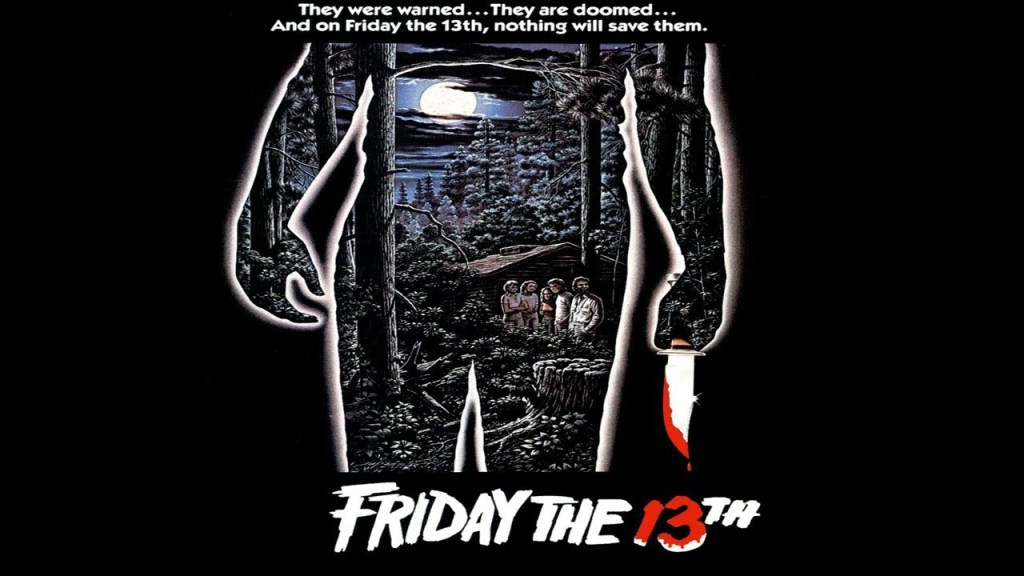
There’s no better way to celebrate the holiday than to schedule a movie marathon with Crystal Lake’s favorite serial killer, Jason Voorhies. You don’t need to see every film in the series because, frankly, a lot of them suck. Here are the five you should go with.
1. Friday the 13th (1980)
The classic film that started it all. This set up Jason’s origin story and the path the other movies would take: dumb horny teen camp counselors getting chopped up one by one. The formula works. I especially like that it’s creepy, spooky, and light on the gore compared to what would come after. Yes, final girl Alice (Adrienne King) is an idiot that you want to slap around, like Mrs. Voorhies (Betsy Palmer) having a fit. Yet, you still root for her to live. Plus, it has one of the best shock endings in horror. Get out of that boat, girl.
2. Friday the 13th Part 2 (1981)
Adult Jason makes his first appearance. No, he’s not wearing
the iconic mask, but that sack with the eyehole cut out is just as terrifying. His
adversary, Ginny (Amy Steel), is much smarter than the one who came before her.
And, there’s a wild chase sequence that really amps up the tension. Word of
warning: don’t stand in front of big windows. Nothing good can come of it.
3. Friday the 13th: The Final Chapter (1984)
One of the best in the series and where it should have ended. It says so in the title. There’s a great cast here, especially a young Corey Feldman (Tommy). He’s a smart kid who can actually take Jason down. How he does it is batshit crazy and that makes it all the better. Big points for Samantha (Judie Aronson) voluntarily jumping out of a second story window and actually surviving. She’s tough, man.
4. Friday the 13th Part VIII: Jason Takes
Manhattan (1989)
It’s utterly absurd, stupid, and cheesy. But that’s not a bad thing. This falls under the it’s so bad it’s good category. You have to love it for the title alone.
5. Friday the 13th (2009)
Few remakes or reboots live up to the original. This one is better than expected. The premise with final girl Jenna (Danielle Panabaker) and Jason makes zero sense, but just go with it. There are some genuine scares here and a scary as hell opening sequence. A nice way to round out your marathon.
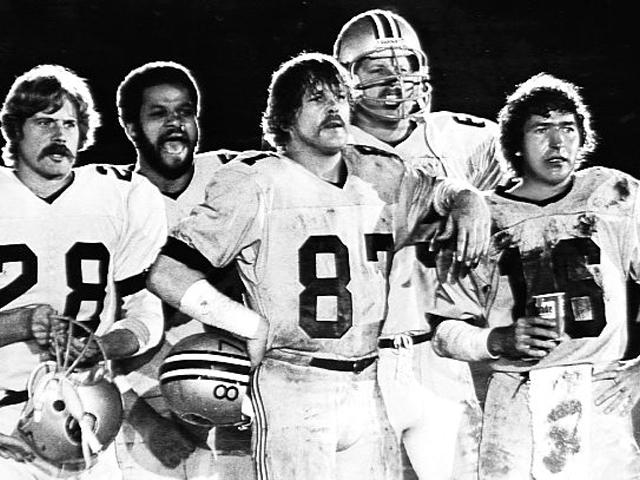
I typically
don’t watch sports or movies about sports, but I’m a big fan of North Dallas
Forty. I can’t quite explain it, you like what you like. The movie
celebrates its 40th Anniversary this year, so why not talk about
this exception to my no-sports rule.
Based
on Peter Gent’s semi-autobiographical novel, NDF follows the players on
the North Dallas Bulls football team. Gent, a former wide receiver for the
Dallas Cowboys, knew that world firsthand. Nick Nolte plays Phil Elliott, a
veteran wide receiver who has seen better days. His body is broken from years
of playing in the league and only a steady stream of drugs (pot and
painkillers) can get him out of bed. A love for the game also keeps him going.
But he understands that the men in charge don’t share that same passion.
Head coach B.A. Strother (G.D. Spradlin) obsesses over figures and percentages, wanting to win at any cost. The owners, the powerful Hunter family (Steve Forrest, Dabney Coleman), seek the money and bragging rights. Football is an industry for these men and the players are just commodities. Phil’s best friend Seth Maxwell (Mac Davis), the charismatic Bulls quarterback, knows how to play the “game”. He warns Phil about toeing the company line. But, Phil rebels, making him a target for B.A. and the Hunters. This David & Goliath story forms the crux of the movie. That’s one of the reasons I like it so much. It’s less about football and more about the little guy beating the cold evil corporation. At one point, lineman O.W. (John Matuszak) rails at assistant coach Johnson (Charles During), “Everytime I call it a business, you call it a game. And every time I call it a game, you call it a business. It’s a powerful truthful statement.
Of
course, the actual football scenes aren’t so bad. The lead up to the big game
in Chicago is one of the best sequences in the movie. All of the players are huddled
in a small locker room with nothing to do but wait. Director Ted Kotcheff focuses
in on their anxiety as he cuts from player to player. They pace around, fidget,
perform pre-game rituals, punch lockers, and even pray. As a viewer you feel
anxious yourself as the minutes creep by. The few moments we see of the game
are filled with tension as we wonder if this weathered team can actually win.
It’s incredibly stressful, yet entertaining. Much better than any real-life game
I’ve ever seen.
Now,
all this praise doesn’t excuse the problematic moments in this
movie. Several women are sexually harassed, lineman Joe Bob (Bo Svenson) says questionable
things to his black team mates, and all of the players are quick to throw
around homophobic slurs. Yes, this came out in 1979, but they really should
have known better even then. I still enjoy the movie, but I don’t condone their
behavior. On the flip side, there’s a clear romance going on between teammates
Balford (Alan Autry) and Partridge (Jeff Severson). They enjoy wrestling around
a little too much, have a very intimate conversation in the locker room
(complete with a cheek caress), and they actually kiss “jokingly”. It
would have been nice if that B-story had been explored.
I first
heard about NDF when I read the coffee table book, The Stewardess is
Flying the Plane: American Films of the 1970s. A great book, by the way. I remember
thinking that I should check out this movie sometime and I’m happy I did. Warts
and all, it’s an interesting look at football in that era, on and off the
field.
*Sidenote**
What’s another good thing about this movie? The Gibson Brothers’ “Cuba” on the soundtrack. Such a fun song.
Up until the other night, I had never seen When Harry Met Sally. No, really. It’s one of those movies that’s so prominent in pop culture that you think you’ve seen it already. You’ve heard the funny lines and watched the clips on those retrospectives. Or even scrolled past a meme that featured a scene. But you don’t totally know the movie. So I decided to actually sit down and watch it. So what if I’m 30 years behind. Here are my takeaways.
Billy Crystal & Meg Ryan have incredible chemistry
In the movie, their characters meet and don’t really like each other. But they have a spark. Eventually they forge a friendship and soon fall in love. There’s not a lot of action here. It’s really just two people talking (and talking) and forming a deeper connection. So you need actors who can make that interesting. Crystal and Ryan do that. They bounce off each other well and make the ups & downs of this relationship engaging. I also have to point out Carrie Fisher (Marie) and Bruno Kirby (Jess). Two of the funniest friends/sidekicks in a rom-com. They steal almost every scene they’re in.
Nora Ephron’s script is the blueprint for romantic comedies
All the plot points that you expect in today’s rom-coms make an appearance. The friction and tension when they first meet. The missed opportunities or miscommunications. And, of course, someone has to make a mad dash at the end to find their romantic partner and proclaim their love. I’m surprised this didn’t happen in an airport. Ephron made theses all staples. Plus she does it with witty quick dialogue and interesting characters. It’s a script that other screenwriters should study.
New York is gorgeous on film
Not a new insight, but the city really pops in this movie. The orange-red leaves in Central Park in fall. The blustery winter scene where they buy the Christmas tree. Museums, restaurants, and fancy NYE parties. Director Rob Reiner captures it all beautifully. It makes you want to move to NY and fall in love. Not that you can afford to do so anymore, but you can dream.
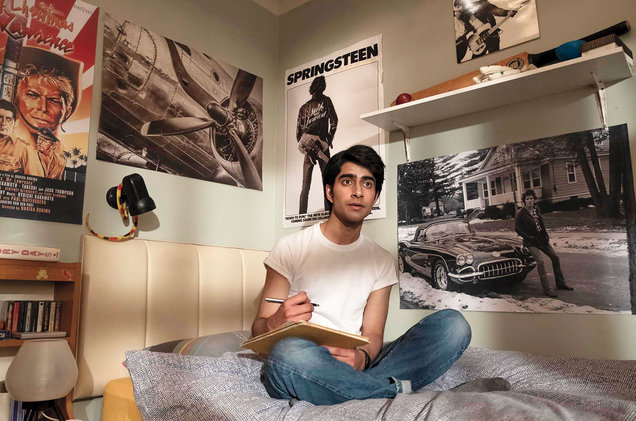
Gurinder Chadha’s Blinded by the Light is a coming of
age movie set to the music of “The Boss”. The story follows Javed (Viveik Kara),
a Pakistani teenager living in the small bleak town of Luton in 1987. Things
aren’t going well for him. His father Malik (Kulvinder Ghir) has been laid off
from his factory job, his mother Noor (Meer Ganatra) works all hours to scrape
up a little money to support the family, and members of a hate group attempt to
force minorities, like Javed’s family, out of town. He finds escape through writing
poetry, something his strict father disapproves of. Malik would rather have a
son with practical aspirations.
Things take a turn for the better when Javed meets fellow classmate, Roops (Aaron Phagura), who introduces him to Bruce Springsteen’s music. The moment he pops in the cassette tape, his world suddenly opens up. He instantly relates to the lyrics. Springsteen sings about getting out of a dead-end town and following your dreams. His words embolden Javed to work on his poetry, stand up to his father, and even go after the girl (Nell Williams) he has a crush on. So much of the film rests on Kara’s shoulders and he doesn’t falter. He shows Javed’s growth as he comes into his own. It’s a fantastic performance, especially considering this is his first starring role.
What I enjoyed most about this film was the powerful effect that
music had on Javed’s life. He’s inspired to reach further because his hero’s
songs urge him to do so. But in the end, he discovers that he was always
talented and capable. Springsteen’s words didn’t give him a voice, they merely
helped him to find it. Amongst the teenage angst and discovery, Chadha expertly
weaves in the theme of the importance of family. Ultimately, Javed is able to build
a bridge between his evolved identity and his loved ones. It’s a heartwarming
story that might have made me tear up a bit…maybe more than a bit.
**Sidenote**
I always thought “Dancing in the Dark” was a simple pop song that Courtney Cox danced to on MTV. Turns out there’s more to it. Having the lyrics projected on screen in Blinded gave me a better appreciation for Springsteen’s writing. I’ll definitely be buying a record or two of his.







 NostalGeoff